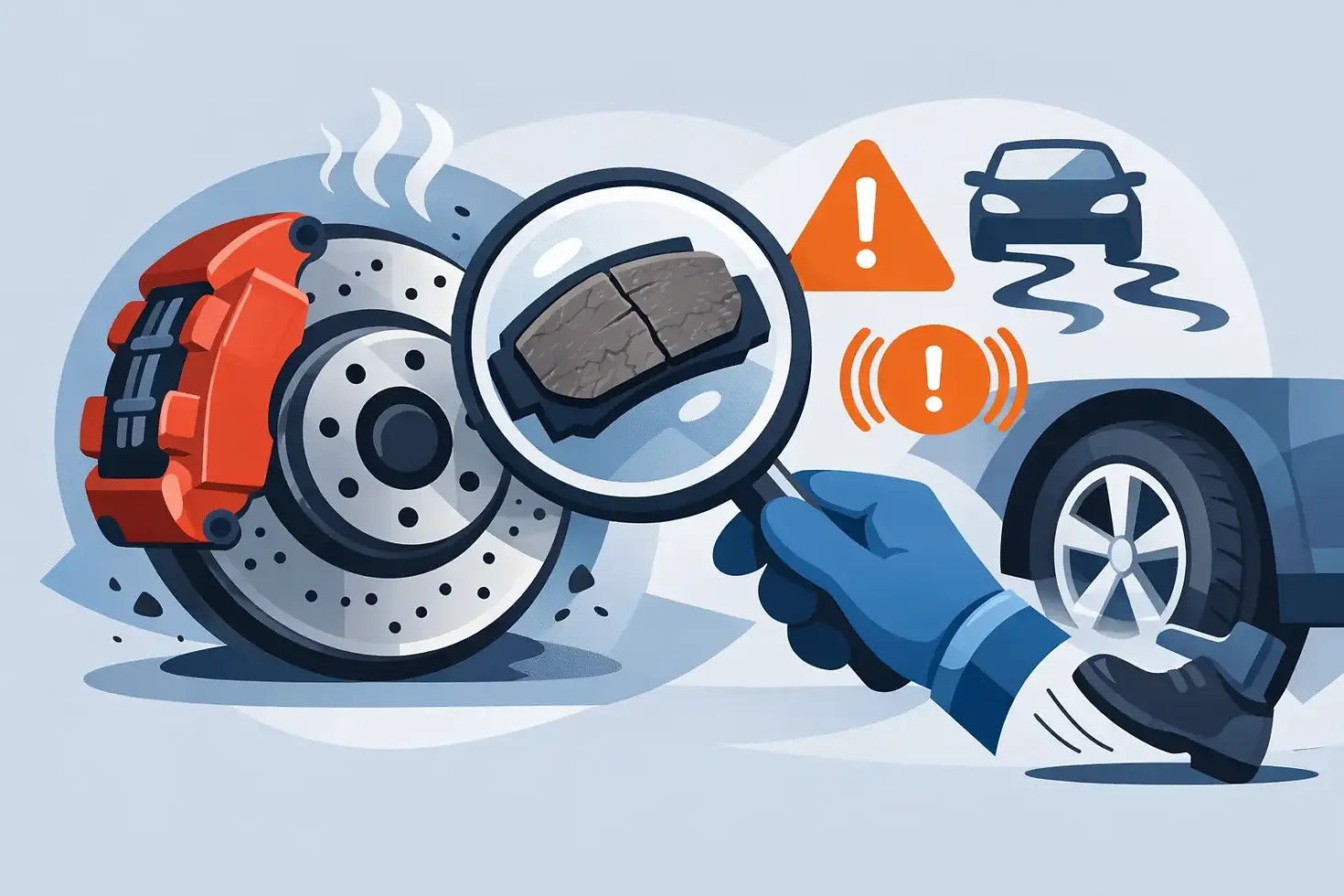
Top Signs Your Brakes Need Service

That light squeal when you back out of the driveway is easy to ignore. So is a little vibration at the stoplight, or a brake pedal that feels softer than it used to. But the top signs your brakes need service usually start small, and waiting rarely makes them cheaper or safer.
Brake problems do not always show up as a dramatic failure. More often, they build gradually through noise, feel, and stopping performance. If your vehicle is telling you something has changed, it is worth paying attention now instead of finding out the hard way in Atlanta traffic.
Top signs your brakes need service before it gets worse
Some brake symptoms mean you should stop driving as soon as possible. Others give you a little time, but not much. The key is knowing which signs point to worn pads, damaged rotors, low brake fluid, or a hydraulic problem that needs immediate attention.
Squealing or screeching when you brake
A high-pitched squeal is one of the most common early warnings. In many cases, that noise comes from a wear indicator built into the brake pad. It is designed to make noise before the pad material gets too low.
That said, not every squeal means the same thing. Moisture, dust, and even overnight rust can cause some temporary noise, especially first thing in the morning. If the sound goes away after a few stops, it may not be urgent. If it keeps happening day after day, especially during normal braking, it is time to have the system checked.
Grinding noise means the problem is already advanced
Grinding is different. If you hear a harsh metal-on-metal sound when braking, the pads may be worn down enough that metal parts are contacting the rotor. That can damage the rotor quickly and turn a smaller brake job into a more expensive repair.
If the grinding happens every time you stop, do not put it off. The vehicle may still drive, but the braking system is no longer in good condition. The longer you wait, the more parts may need to be replaced.
Your car takes longer to stop
One of the clearest signs your brakes need service is a longer stopping distance. You press the pedal at the usual point, but the car does not slow down as confidently as it used to. That change can happen gradually, which is why many drivers adjust without realizing it.
Reduced stopping power can come from worn pads, overheated components, contaminated brake fluid, or uneven rotor wear. It can also be tied to tire condition or road surface, so context matters. But if your vehicle consistently needs more room to stop, the brakes need attention.
Changes in how the brake pedal feels
Drivers often notice pedal feel before they hear noise. That matters because the pedal is your direct connection to the braking system.
Soft or spongy brake pedal
If the pedal feels soft, spongy, or sinks lower than normal, there may be air in the brake lines, moisture in the fluid, or a leak in the hydraulic system. This is not a symptom to monitor for a few weeks. Hydraulic issues can reduce braking performance fast.
Sometimes the pedal will feel better after pumping it once or twice. That is not a fix. It is a sign something is wrong.
Hard brake pedal
A pedal that feels unusually hard can also point to trouble. In some cases, that means a problem with the brake booster or vacuum assist. The brakes may still work, but stopping the vehicle can take more force than normal.
That can become dangerous in heavy traffic or panic-stop situations where fast response matters. If braking suddenly feels harder than usual, it should be inspected.
The pedal vibrates or pulses
A pulsing brake pedal often points to rotor issues, especially warped or unevenly worn rotors. You may feel it more at higher speeds or during moderate to firm braking.
There is some nuance here. On vehicles with ABS, a fast pulse during a hard emergency stop can be normal. That is the system doing its job. But if you feel vibration during everyday braking at stop signs or red lights, that is different. It usually means the braking surfaces are no longer smooth and even.
Your steering wheel shakes when braking
If the steering wheel shakes as you slow down, the front braking components are often involved. Uneven rotor wear is a common cause, but suspension or tire issues can also contribute.
The important part is this: shaking under braking is not normal. If the vehicle drives smoothly at cruising speed but vibrates when you press the brake pedal, the brake system should be high on the list.
For drivers who spend a lot of time on the highway or in stop-and-go Atlanta traffic, this symptom tends to get worse, not better. Heat and repeated braking can make an existing issue more noticeable.
The vehicle pulls to one side
When you brake, the car should slow in a straight line. If it pulls left or right, one side may be braking harder than the other. That can happen with a stuck caliper, uneven pad wear, contaminated brake components, or a hose issue.
It depends on when the pull happens. If the car drifts all the time, alignment or tire pressure may be part of the problem. If it specifically pulls while braking, the brake system is a likely cause.
This is more than an annoyance. Pulling changes how predictable the vehicle feels in traffic and during quick stops. That is reason enough to get it checked sooner rather than later.
Warning lights on the dash
Modern vehicles often give you a clear warning before brake issues become severe. If the brake warning light or ABS light comes on, do not assume it is minor.
Sometimes it is as simple as low brake fluid or a sensor issue. Sometimes it points to a larger fault in the braking system or anti-lock system. Either way, warning lights are there for a reason.
A dashboard light by itself does not always tell you exactly what part failed. It tells you the system needs diagnosis. Ignoring it only increases the chance of a more disruptive repair later.
Burning smell after driving
A sharp chemical or burning odor near the wheels after driving can signal overheated brakes. This may happen after heavy braking, driving with a stuck caliper, or parking with components excessively hot.
If you notice the smell along with smoke, reduced stopping power, or a wheel that feels unusually hot, stop driving until the issue is checked. Overheated brakes can lose effectiveness, and that is not something to gamble with.
Brake fluid is low or looks dirty
Brake fluid does not get much attention from most drivers, but it plays a major role in braking performance. If fluid is low, there may be a leak or pad wear that needs inspection. If the fluid looks dark or contaminated, it may no longer perform the way it should under heat.
A brake fluid flush is not about selling an extra service. It is routine maintenance that helps protect the hydraulic system and keep pedal feel consistent. On some vehicles, neglecting fluid can lead to corrosion inside expensive components.
Why brake problems get expensive fast
Brake issues are one of the clearest cases where early service saves money. Replacing worn pads in time is usually simpler than replacing pads and rotors after metal-on-metal contact. Catching a fluid issue early is easier than dealing with damaged hydraulic parts later.
There is also the downtime factor. If you wait until the brakes are grinding, pulling hard, or barely stopping well, you may not have the option to keep driving safely until it fits your schedule. The repair becomes urgent, and urgent repairs are always more disruptive.
That is exactly why mobile brake service makes sense for busy drivers, rideshare operators, and fleet vehicles. No waiting. No towing. No hassle. A technician can inspect the problem where the vehicle already is and handle the repair without sending you across town.
What to do if you notice these signs
If your brakes are squealing, vibrating, pulling, or taking longer to stop, do not try to diagnose everything by sound alone. Different brake problems can feel similar from the driver’s seat. A proper inspection matters.
If the symptom is mild, such as occasional squealing with normal stopping power, schedule service soon. If you have grinding, a soft pedal, a strong pull while braking, warning lights, or a sudden loss of confidence in stopping, treat it as urgent.
For Atlanta drivers trying to fit car care into a full day, convenience matters almost as much as price. That is where a focused brake specialist can make the process easier. Brakes Stop & Go handles brake service at your home or workplace, which means you do not have to rearrange your day just to get safe stopping power back.
Your brakes rarely fail without warning. They usually speak up first through noise, feel, and changes in performance. When they do, listen early and deal with it while the fix is still simple.


Comments