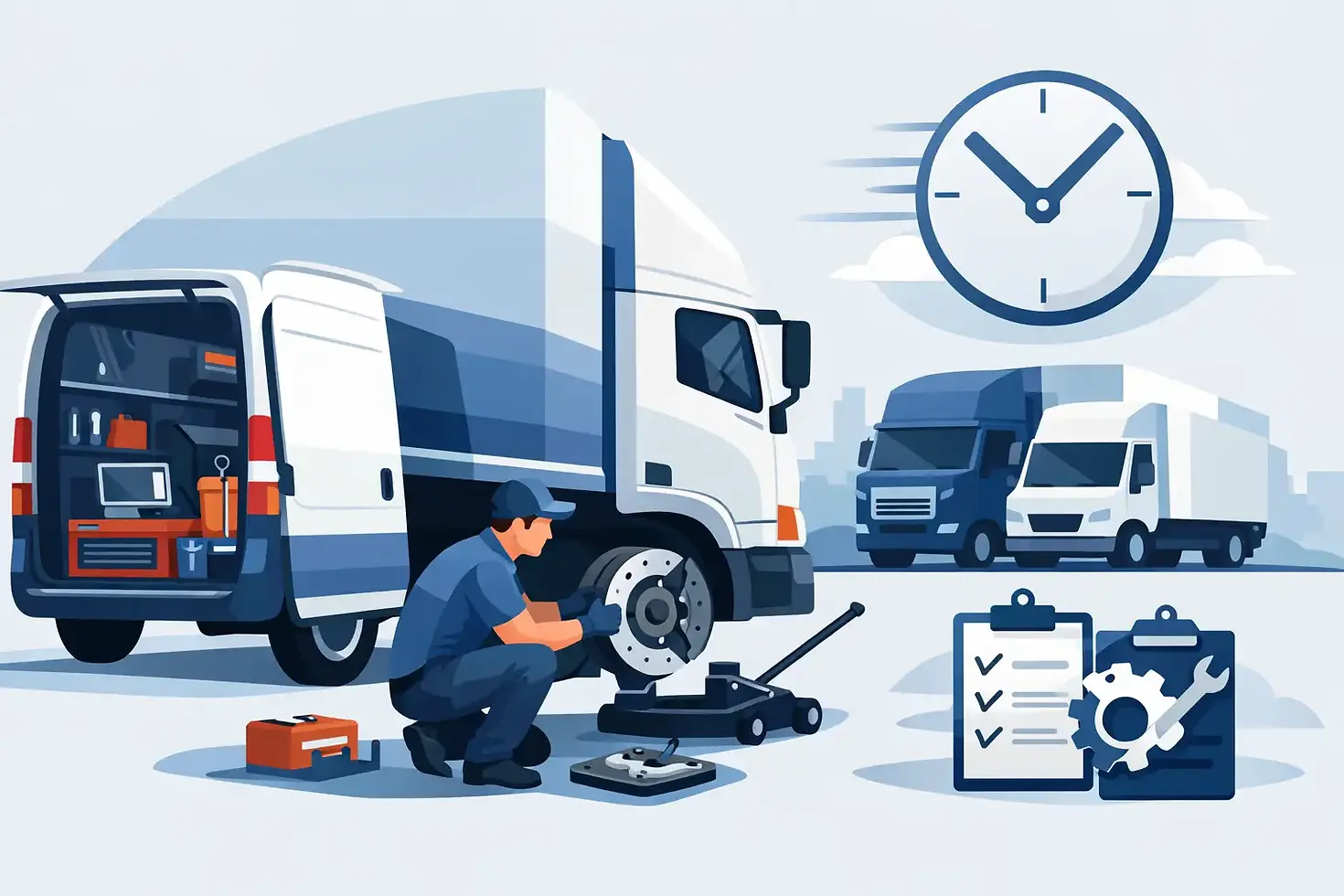
Mobile Brake Service for Fleets That Saves Time

A fleet vehicle with soft brakes at 8:00 a.m. can throw off the rest of the day. One missed route turns into late jobs, unhappy customers, overtime, and a driver stuck waiting at a repair shop. That is exactly why mobile brake service for fleets makes sense for businesses that need vehicles working, not sitting.
For fleet managers, small business owners, and operations teams, brake service is not just maintenance. It is uptime, scheduling, driver safety, and cost control. If your vans, work trucks, delivery vehicles, or service cars spend hours off the road for routine brake work, the real expense is often bigger than the repair invoice.
Why mobile brake service for fleets works
Traditional shop visits create friction at every step. Someone has to move the vehicle, wait for an open bay, approve the work, and then bring it back. If the shop is backed up, that downtime stretches even longer.
Mobile brake service changes that model. A technician comes to your office, lot, job site, or other approved location and handles the brake inspection, diagnosis, and repair there. No towing. No shuttle runs. No waiting room.
For fleets, that matters because brake problems rarely happen at a convenient time. A squeal, grind, vibration, or warning light can show up in the middle of a full schedule. On-site service lets you address the issue without disrupting every other moving part of the day.
There is also a practical labor benefit. Your team is not spending paid time dropping off vehicles or sitting around for updates. The work happens where the vehicle already is, which keeps your drivers and staff focused on their actual jobs.
The real cost of brake downtime
Most fleet operators look at parts and labor first. That is fair, but it is only part of the picture.
When a vehicle leaves service for brake work, you may also be paying for missed appointments, delayed deliveries, rescheduling headaches, and extra wear on backup vehicles covering the gap. If you run a lean fleet, one sidelined vehicle can put pressure on the whole operation.
Brake issues also tend to get more expensive when they are delayed. Replacing brake pads at the right time is usually straightforward. Waiting until metal grinds into the rotor is not. Keep pushing beyond that point, and now safety becomes an immediate concern, not just a maintenance line item.
That is where mobile service earns its value. Quick response and on-site repairs make it easier to fix brake issues early, before a smaller job becomes a larger one.
What fleet brake service usually includes
The exact scope depends on the vehicle and the condition of the braking system, but most fleet brake visits start with a clear inspection. The technician checks pad life, rotor condition, calipers, brake fluid condition, and any signs of uneven wear or brake performance issues.
From there, the service may include pad replacement, rotor replacement, brake fluid flushes, and diagnosis of symptoms like pulling, pulsation, squealing, or reduced stopping power. If a driver reports a concern but cannot explain it in mechanical terms, that is normal. A good service provider should be able to translate those symptoms into a clear diagnosis without making the process harder than it needs to be.
For fleets, consistency matters too. If multiple vehicles are serviced over time, you want a provider that can identify patterns - faster front pad wear, repeat fluid issues, or driving conditions that are affecting brake life across the group. That kind of visibility helps with planning.
Mobile brake service for fleets is not one-size-fits-all
Different fleets have different demands. A plumbing company running loaded vans around Metro Atlanta will not see the same brake wear as a real estate team driving lighter vehicles on mixed routes. Rideshare and delivery vehicles may need brake attention more often simply because they stop more often and spend more time in traffic.
That is why the best fleet brake service is practical, not generic. It should match your vehicle mix, daily usage, and scheduling realities. Some businesses need one vehicle checked immediately. Others need a maintenance plan for several units over time. Both are valid.
There are trade-offs to consider. Mobile service is ideal for many brake jobs, but extremely complex repairs or issues outside the scope of safe on-site work may still require a shop setting. A trustworthy provider will tell you that directly instead of overpromising. For routine brake maintenance and many common brake repairs, though, mobile service is often the faster and easier option.
What to look for in a fleet brake provider
Convenience matters, but it should not be the only selling point. Fleet managers also need confidence that the work is done right and priced clearly.
Start with specialization. If brakes are a core service, that usually means better process, faster diagnosis, and fewer surprises. Brake work is not something you want handled casually.
Next, look at parts quality and warranty coverage. Cheap components can lower the invoice today and raise the total cost later if noise, dust, or premature wear shows up too soon. Quality brake pads and a straightforward warranty help protect the repair and reduce repeat downtime.
Transparent pricing matters just as much. Fleet operators need to budget and approve repairs quickly. If every estimate feels vague or padded, decision-making slows down. Clear starting prices and plain explanations make it easier to keep vehicles moving.
Responsiveness is another big factor. When a driver reports a brake issue, you do not need a complicated process. You need a provider who can communicate clearly, schedule efficiently, and explain what is urgent versus what can be planned.
Safety and driver confidence
Brake service is one of those areas where operations and safety overlap completely. Drivers know when a vehicle does not feel right. If the brake pedal is soft, the steering wheel shakes during braking, or the vehicle pulls to one side, they notice it right away.
Ignoring those signs does more than risk a bigger repair. It also affects driver confidence. A vehicle that feels unsafe is not one your team wants to take out on a full route.
Prompt brake service helps protect your drivers, your customers, and your business. It also supports a stronger maintenance culture. When drivers know issues will be addressed quickly instead of brushed aside, they are more likely to report problems early.
Keeping fleet maintenance simple
Fleet maintenance gets harder when every repair becomes a scheduling puzzle. The simpler the process, the easier it is to stay ahead of problems.
That is one reason mobile service works well for growing businesses. You do not need a large internal maintenance setup to keep vehicles in shape. You just need a dependable outside partner who can handle brake inspections, repairs, and maintenance where your vehicles already are.
Brakes Stop & Go fits that model well for Metro Atlanta fleets because the service is built around on-site brake work, straightforward communication, ceramic brake pads, and warranty-backed repairs. That kind of focused approach makes a difference when your priority is getting vehicles serviced quickly without the usual shop delays.
If you manage several vehicles, it also helps to keep records on timing, mileage, and prior brake work. Even a simple tracking system can make future service decisions easier. You do not need perfect data, but you do need enough visibility to avoid reactive maintenance every time a problem shows up.
When mobile fleet brake service makes the most sense
It is especially useful when your vehicles operate on tight schedules, when sending drivers to a shop creates lost productivity, or when your business cannot afford long service delays. Service vans, delivery fleets, rideshare vehicles, field teams, and local commercial fleets all benefit for the same basic reason - every hour off the road has a cost.
It also makes sense when convenience is not just a perk but part of operational efficiency. If a technician can perform brake service in your parking lot while your team works, that is a better use of the day than shuffling vehicles across town.
Some businesses will still use a combination of mobile service and shop service depending on the repair. That is normal. The goal is not to force every job into one model. The goal is to reduce unnecessary downtime wherever you can.
For fleet operators, brake service should be easy to schedule, easy to understand, and easy to trust. When that happens, maintenance stops feeling like a disruption and starts working the way it should - as a practical part of keeping your business moving.


Comments