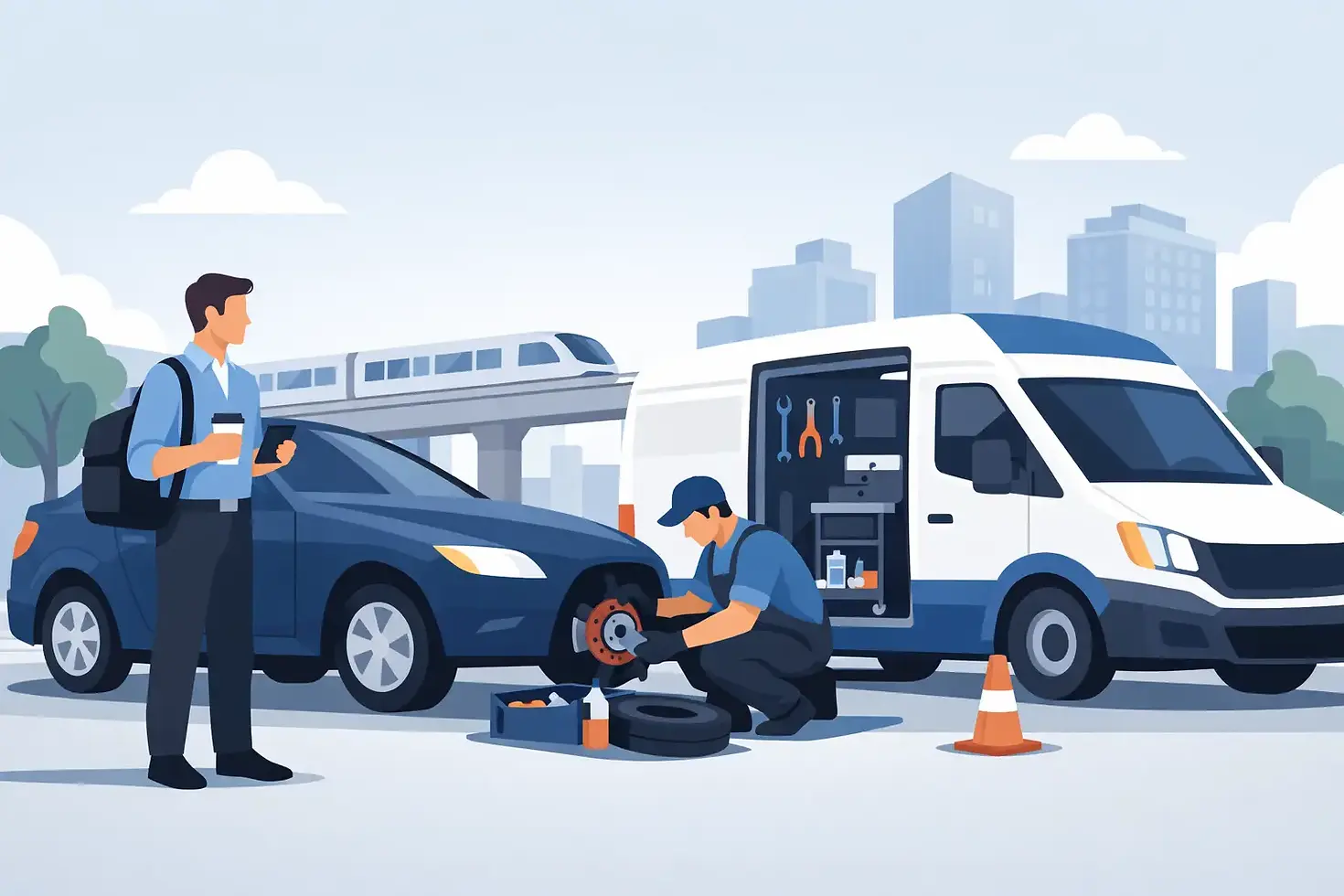
Mobile Brake Repair for Commuters

That grinding sound usually shows up at the worst possible time - backing out of the driveway before work, creeping through Atlanta traffic, or pulling into the school pickup line. For drivers who rely on their car every day, mobile brake repair for commuters is not just convenient. It is often the fastest, least disruptive way to handle a safety issue before it turns into a bigger problem.
Traditional repair shops ask for time most commuters do not have. You have to rearrange your morning, sit in a waiting room, coordinate a ride, or leave the car overnight. If the brakes are bad enough, you may also need a tow. Mobile brake service changes that equation. A technician comes to your home, office, or job site, diagnoses the issue, and handles the repair where the vehicle is parked.
Why mobile brake repair for commuters makes sense
If your week is built around deadlines, school drop-offs, client visits, or long drives across Metro Atlanta, losing half a day at a repair shop is expensive in more ways than one. You are not just paying for parts and labor. You are paying with missed meetings, disrupted schedules, and extra transportation headaches.
Mobile service removes most of that friction. The vehicle stays where it is. You keep working, stay at home with the kids, or go on with your day while the repair is being handled nearby. That is the real advantage for commuters. It cuts downtime without cutting corners on the repair itself.
There is also a safety benefit. A lot of drivers put off brake work because getting to a shop feels like a project. When service comes to you, it becomes easier to deal with warning signs early, before worn pads damage rotors or low brake fluid leads to a larger problem.
The brake problems commuters should never ignore
Most brake issues do not start with a total failure. They start small. A squeak at stoplights. A slight vibration in the steering wheel. A brake pedal that feels softer than usual. A little extra stopping distance in traffic.
Those symptoms matter. Brake pads wear down over time, rotors can become uneven, calipers can stick, and brake fluid can lose effectiveness as it absorbs moisture. For a commuter who spends serious time on crowded roads, those changes can show up faster than expected. Stop-and-go traffic puts real demand on braking systems.
A few signs should move to the top of your list quickly. Grinding usually means the friction material on the brake pad may be gone. Pulling to one side can point to uneven braking or a sticking component. A shaking pedal or vibration during braking often suggests rotor issues. If a brake warning light comes on, that should not wait.
It depends on the severity, of course. A light squeak may not mean an emergency that same day. Grinding, poor stopping power, or fluid-related problems are different. Those deserve immediate attention.
What a mobile brake service visit usually includes
A good mobile brake appointment should feel straightforward from the first call. You explain the symptoms, confirm the vehicle information, and schedule service at a location that works for you. Once the technician arrives, the first step is diagnosis. That matters because brake noise does not always come from the same source, and replacing parts blindly costs more in the long run.
After inspection, you should get a clear explanation of what is worn, what still has life left, and what the repair involves. Some vehicles only need new brake pads. Others need pads and rotors together. In some cases, the issue may involve a caliper, brake fluid condition, or uneven wear caused by another component.
This is where specialization matters. Brake work is not an oil change add-on. It is a safety service. A provider focused on brake diagnosis and repair is more likely to spot the difference between a routine wear item and a problem that could come back if it is not fixed correctly.
For many commuters, the biggest question is whether mobile service is as complete as shop service. In many common brake jobs, yes. Pads, rotors, brake inspections, fluid flushes, and related maintenance can often be done on-site. The limitation is usually not quality. It is job type. If a repair requires major shop equipment or uncovers a less common issue outside mobile scope, a trustworthy provider should say so plainly.
How mobile brake repair compares to a traditional shop
The biggest advantage is time. A repair shop may still be the right fit for complex work, but routine brake service often does not need a waiting room, a shuttle ride, or half a day off work.
Cost can vary. Mobile service is not automatically cheaper in every case, but it often saves money indirectly by reducing towing risk, time away from work, and the chance of delaying the repair until more parts are damaged. If worn pads are replaced early, you may avoid paying for rotors later. If a brake fluid issue is caught quickly, you may avoid more serious braking problems.
There is also the customer experience. A traditional shop can feel vague. You drop off the car, wait for an update, and hope the quote makes sense. Mobile service tends to be more direct because the technician is at your location, looking at your vehicle, explaining what they see. That kind of transparency matters when you are trying to make a quick decision on a weekday.
What commuters should ask before booking
Not every mobile mechanic is built the same way. If you need brake service, ask whether the provider specializes in brakes or treats them as one item on a long menu. Ask what parts they use, whether pricing is explained upfront, and whether the work is backed by a warranty.
Those details tell you a lot. Quality brake components affect noise, dust, and long-term wear. Warranty coverage shows whether the company stands behind the repair after the appointment is over. Clear pricing helps you make a decision without feeling boxed in.
For busy drivers, logistics matter too. Ask where service can be performed and what appointment windows look like. Home and workplace service are especially useful for commuters because they turn repair time into normal life time.
Brakes Stop & Go is built around that model - focused brake service at your location, ceramic brake pads on every vehicle, transparent starting pricing, and a 12-month/12,000-mile warranty that gives drivers one less thing to worry about.
Mobile brake repair for commuters in heavy traffic
Commuter driving is harder on brakes than many people realize. Highway miles can be easier on a braking system than daily stop-and-go driving through packed corridors, short merges, and repeated red lights. Add heat, weather, and long Metro Atlanta drives, and wear can build quickly.
That is why waiting for the problem to get louder is usually the wrong move. Brake pads are cheaper than pads plus rotors. A fluid flush is simpler than dealing with degraded braking performance after months of neglect. Early service is not just about safety. It is also one of the better ways to control repair cost.
For rideshare drivers, delivery drivers, and fleet vehicles, the case is even stronger. When the car is the source of income, downtime costs money. Mobile brake service helps keep vehicles in rotation and reduces the scheduling mess that comes with sending every unit to a shop.
When mobile service is the better choice
If the vehicle is still safe to inspect on-site, your schedule is tight, and the problem appears related to routine brake wear or maintenance, mobile service is often the better choice. It is especially useful when the issue starts during a workweek and you need a solution without losing the whole day.
If the vehicle has severe brake failure, accident damage, or a broader mechanical problem that needs full shop equipment, a shop may still be necessary. A dependable provider will tell you that instead of forcing a fit.
That honesty matters. The goal is not to turn every job into a mobile job. The goal is to fix the right problem in the most practical way possible.
For commuters, that practicality is hard to beat. No waiting. No towing. No hassle. Just a clear diagnosis, quality brake work, and a vehicle ready for tomorrow morning's traffic.


Comments