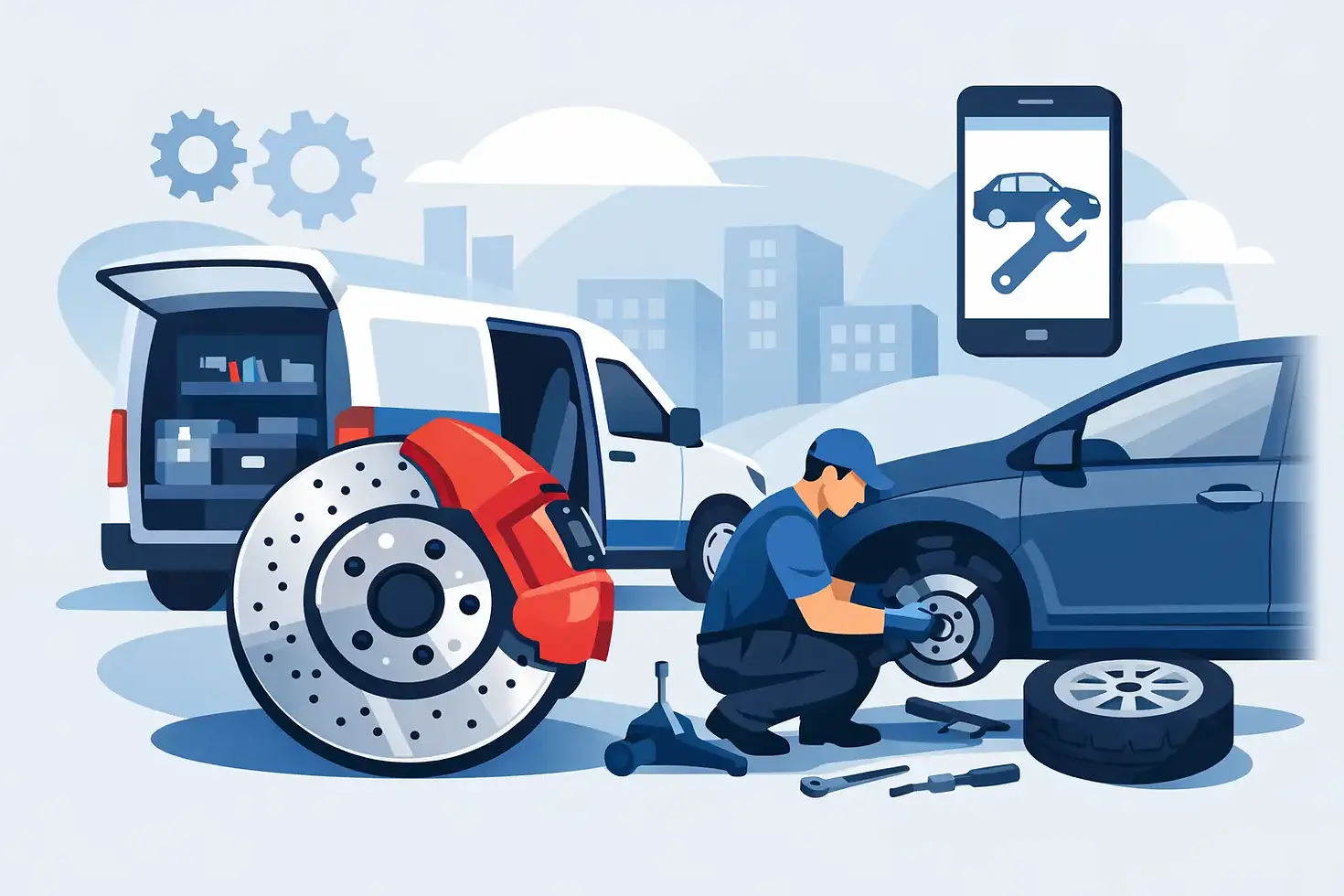
How Mobile Brake Repair Works

That grinding sound usually starts at the worst time - on the way to work, in the school pickup line, or right before a busy weekend. If you have been wondering how mobile brake repair works, the short answer is simple: a trained technician comes to your location, inspects the braking system, confirms the problem, and completes the repair on-site when the job is a good fit for mobile service. No towing. No waiting room. No losing half your day at a repair shop.
For a lot of Atlanta drivers, that convenience is the main reason to book. But convenience only matters if the work is done right. Brake service is a safety repair, so the process has to be efficient and thorough. That is where a focused mobile brake service stands apart from a general repair shop trying to do everything.
How mobile brake repair works from start to finish
Most mobile brake appointments begin with a call, online booking request, or text. You describe the issue - squeaking, grinding, vibration, soft pedal feel, longer stopping distance, or a brake warning light. In some cases, the problem sounds obvious. In others, it could be a brake issue, suspension problem, or something else entirely. A good provider will not guess. They will schedule diagnosis first if needed.
Once the appointment is set, the technician travels to your home, office, or another safe location where the vehicle can be inspected and repaired. That matters more than people think. Mobile brake work is not done on the side of a busy road in unsafe conditions. The vehicle needs to be parked on stable ground with enough room to lift it properly and complete the job safely.
After arrival, the technician verifies the customer concern and performs an inspection. That usually includes checking brake pad thickness, rotor condition, caliper operation, brake fluid condition, and visible wear points in the system. If the symptoms suggest a deeper issue, the inspection may also include checking for brake hose problems, seized hardware, uneven wear, or leaks.
From there, the technician explains what is actually needed. Sometimes it is a straightforward pad and rotor replacement on one axle. Sometimes the repair is more involved, such as replacing worn pads, damaged rotors, and servicing components that are sticking or unevenly worn. And sometimes the right answer is that the vehicle should go to a full shop because the issue goes beyond what should be handled in a mobile setting. Honest diagnosis is part of the service.
What can be repaired on-site
Mobile brake service is ideal for many of the most common brake jobs. That includes brake pad replacement, rotor replacement, brake fluid flushes, brake inspections, and many routine brake maintenance services. These are the jobs that often send people to a shop for hours, even though the actual repair may not be especially complicated for an experienced technician.
In practical terms, on-site service works best when the repair can be completed with the tools, parts, workspace, and testing available in the field. For most daily drivers, that covers a large share of brake problems. If your brakes are squealing from worn pads, pulsing because of damaged rotors, or feeling weak due to old brake fluid, mobile service is often a direct and efficient solution.
It depends on the vehicle and the condition, though. If a car has major hydraulic system damage, severe rust issues, electronic brake system faults that require deeper programming, or damage that affects safe mobile repair, a responsible technician will say so. That is not a drawback. It is exactly what you want from someone working on a safety system.
The inspection matters more than the parts
A lot of drivers assume brake repair means swapping out pads and moving on. Sometimes that is enough. Often, it is not.
Brake wear tells a story. If the inside pad is worn much more than the outside pad, there may be caliper or hardware issues. If one side is hotter than the other, something may be sticking. If the rotor is damaged, installing new pads alone can leave you with noise, vibration, or poor braking performance. If the brake fluid is overdue, the system may still feel weak even after new friction parts are installed.
That is why the inspection step matters so much in how mobile brake repair works. The job is not just replacing what looks worn. It is identifying what caused the wear and making sure the repair actually solves the complaint.
For customers, this is where transparency matters too. You should know what was found, what needs attention now, and what can wait. You should also understand the price before work starts. Clear communication is a major part of trust, especially when the service is coming to you instead of happening behind a shop wall.
Why drivers choose mobile service over a shop
The biggest benefit is time. Traditional brake repair usually means arranging your schedule around the shop, driving there carefully if the brakes are already in bad shape, waiting for an inspection, approving the estimate, then waiting again for the repair. If the shop is backed up, your car may sit for hours before anyone touches it.
Mobile service cuts out most of that friction. The technician comes to your location, the inspection happens there, and approved repairs are completed there. For working adults, parents, fleet managers, and rideshare drivers, that difference is not minor. It can mean staying productive instead of rearranging the whole day.
There is also a cost angle. Mobile brake companies with a focused service model often avoid the overhead of a traditional shop, and that can help keep pricing more predictable. That does not mean every mobile repair is cheaper in every case. Some jobs require extra labor, specialty parts, or more involved diagnosis. But many customers find mobile service offers a better mix of convenience, transparency, and value than a dealership service lane.
How pricing usually works
Brake pricing depends on the vehicle, the axle being serviced, the parts required, and what the inspection finds. A front brake job may not match the rear. A compact sedan will not price the same as a heavy SUV or work van. And a simple pad and rotor replacement is different from a repair that also needs caliper service or a fluid flush.
What customers should look for is straightforward pricing structure, not vague promises. A reputable mobile provider should be able to give starting prices for common services and then explain what changes the final number. That keeps expectations realistic and avoids the unpleasant surprise of a low teaser price turning into a much bigger bill.
Payment flexibility matters too, especially for urgent repairs. Brake problems rarely show up when it is convenient, so the ability to pay by card, digital wallet, or financing option can make it easier to fix the issue now instead of putting it off.
Quality control in a mobile setting
Some people hear “mobile repair” and assume it is less professional than shop work. In reality, the quality comes down to the technician, the inspection process, the parts used, and the standards behind the service.
A strong mobile brake provider does not cut corners just because the work is happening in a driveway or office parking lot. The vehicle is lifted safely. Parts are matched correctly. Brake components are inspected carefully. The repair is tested before the job is complete. And the customer gets a clear explanation of what was done.
Parts matter here. Brake pads, in particular, affect noise, dust, stopping feel, and longevity. That is one reason some specialized providers use ceramic brake pads across the board. They are not the answer for every edge case, but for many everyday drivers they offer a solid balance of performance, cleaner operation, and durability.
Warranty support matters too. If a company stands behind the work with coverage such as 12 months or 12,000 miles, that gives customers added confidence that convenience is not replacing accountability.
When to book mobile brake repair
You do not need to wait until the brakes are metal-on-metal. In fact, waiting usually makes the repair more expensive.
Book service if you hear squeaking or grinding, feel vibration when braking, notice the car pulling during stops, experience a soft or spongy pedal, or see a brake warning light. Those signs do not all mean the same thing, but they all deserve attention. The earlier the issue is diagnosed, the better the chance of keeping the repair simpler and less costly.
If the vehicle feels unsafe to drive, do not force it to a shop. That is one of the clearest situations where mobile service makes sense. A provider like Brakes Stop & Go can come out, inspect the problem, and handle many brake repairs where the car already sits.
Brake service should not require a tow, a waiting room, and half a day off work just to find out what is wrong. The best mobile brake repair keeps the process simple: inspect carefully, explain clearly, repair safely, and get you back on the road without the usual hassle.


Comments