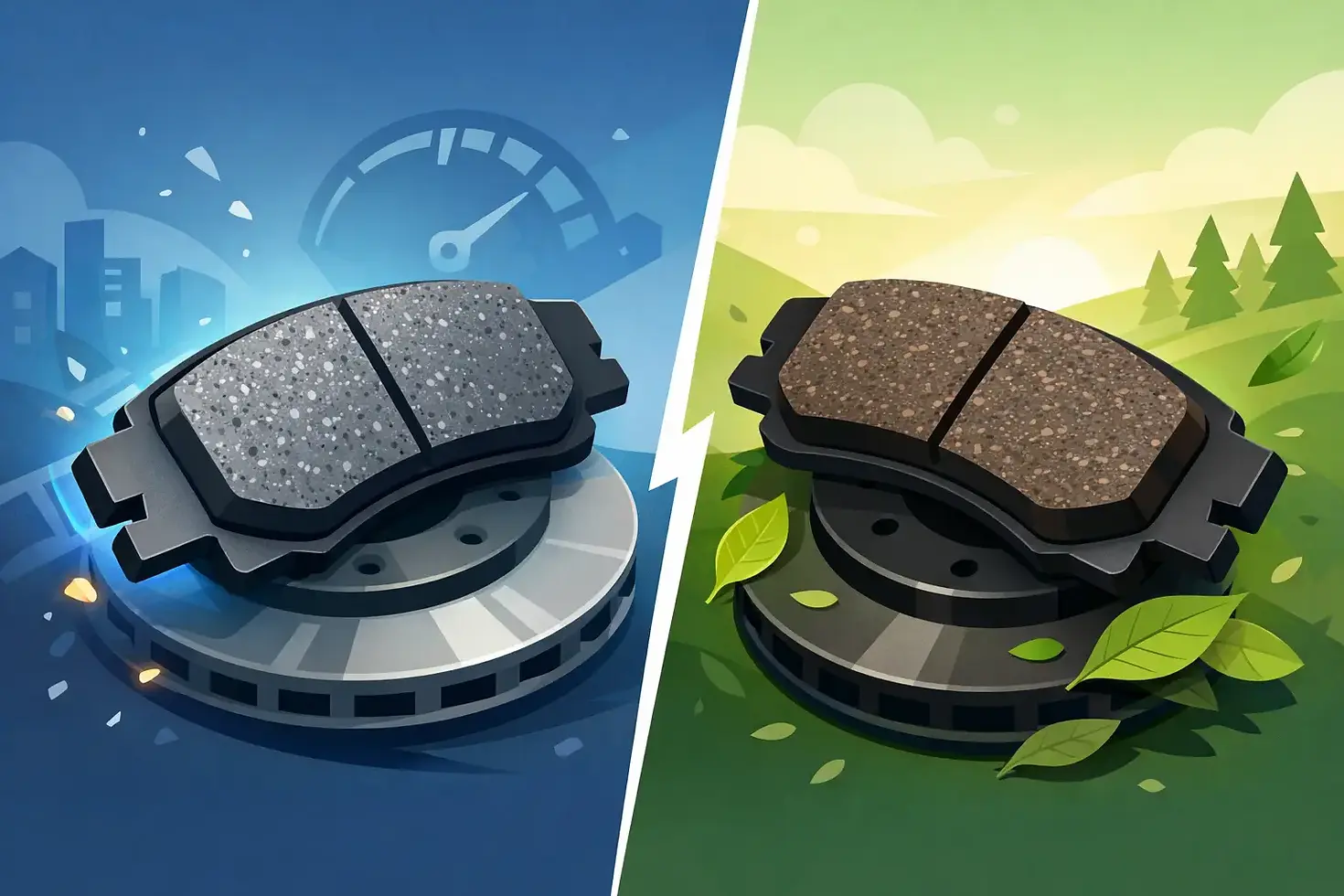
Ceramic Pads vs Organic: Which Lasts?

You usually notice bad brake pad choices after the install, not before. That is why the ceramic pads vs organic question matters more than most drivers think. The wrong pad can mean extra brake dust on your wheels, shorter pad life, more noise at the wrong time, or braking performance that does not match how and where you drive.
For most Atlanta-area drivers, brake pads are not a hobby. They are a practical decision tied to safety, cost, and downtime. If you commute, carry kids across town, run a work vehicle, or put serious miles on a rideshare car, you need pads that stop well and hold up without creating new problems.
Ceramic pads vs organic: the basic difference
Organic brake pads are typically made from non-metallic materials such as fibers, fillers, and resins. They are designed to create friction against the rotor without using heavy metal content. Years ago, they were a common choice for many passenger vehicles because they were softer, quieter in some conditions, and usually cheaper up front.
Ceramic brake pads use a denser ceramic-based friction material mixed with small amounts of fine metal. They are built to handle heat better, wear more slowly, and produce finer dust that is less noticeable on wheels. In everyday driving, that often translates to cleaner wheels, steadier performance, and longer service life.
That does not mean organic pads are always wrong and ceramic pads are always right. It means each one has trade-offs, and those trade-offs show up differently depending on the vehicle and the driver.
How they feel on the road
The average driver cares about one thing first - does the car stop smoothly and predictably?
Organic pads tend to feel softer when braking. Some drivers like that because initial pedal response can feel gentle and less grabby. For light-duty driving, that can seem perfectly fine. The downside is that softer pad material generally wears faster, especially in stop-and-go traffic or under heavier use.
Ceramic pads usually deliver a more consistent feel over time. They perform well across a wider temperature range in normal daily driving, which matters when you are braking hard on the highway, sitting in traffic on a hot day, or making repeated stops through city streets. They are not race pads, but for street use they are often the more stable and dependable option.
If your driving is mostly short local trips in a light vehicle, organic pads may feel acceptable. If your vehicle sees commuting, frequent braking, heavier loads, or a lot of miles, ceramic pads usually make more sense.
Noise and brake dust
This is where the difference becomes obvious fast.
Organic pads can be quiet when fresh, but because they are softer and wear faster, they may not stay that way as long. They also tend to create more visible brake dust. If you hate seeing dark buildup on your wheels a week after a wash, this matters.
Ceramic pads are widely preferred for low-dust performance. The dust they produce is typically finer and lighter in color, so it does not cling to the wheels the same way. They also tend to run quieter in normal daily use when installed properly with quality hardware and rotors in good condition.
Noise is never just about pad material. Rotor condition, hardware, shims, lubrication, and proper installation all matter. But if two quality pad options are compared side by side for everyday driving, ceramic usually has the edge in keeping things cleaner and quieter over the long run.
Heat, wear, and lifespan
Brake pads live and die by heat. Every stop creates friction, and friction creates temperature. The more weight you carry, the faster you drive, and the more often you brake, the more heat the system has to manage.
Organic pads generally wear down faster because the material is softer. That softer makeup can also make them less ideal when brakes get hot repeatedly. In light use, that may not be a big issue. In heavier traffic, hilly areas, or higher-mileage driving, it starts to show.
Ceramic pads are better at handling repeated daily heat cycles without wearing out as quickly. That longer lifespan can help offset the higher initial cost. A cheaper pad is not always cheaper if it needs replacement sooner.
For drivers trying to control long-term maintenance costs, this matters. The pad price on day one is only part of the story. Service intervals, rotor wear, downtime, and repeat labor matter too.
What this means for high-mileage drivers
If you drive for work, commute long distances, or manage fleet vehicles, ceramic pads are usually the smarter investment. More miles mean more brake use, and more brake use exposes the weak points of lower-grade or shorter-life pads fast.
That is one reason Brakes Stop & Go uses ceramic brake pads on every vehicle. For mobile brake service, the goal is not just getting the car back on the road today. It is reducing the chance that the customer is dealing with the same issue again too soon.
Cost: cheaper now or better value later?
Organic pads usually cost less up front. If you are comparing parts only, they can look like the budget-friendly option. For someone trying to spend the least amount possible today, that may be appealing.
But lower initial cost does not always mean lower total cost. If organic pads wear out sooner, create more dust, or do not perform as consistently for your driving habits, you may end up paying again earlier than expected.
Ceramic pads often cost more at the start, but they tend to earn that back in longer life, cleaner operation, and more stable daily performance. For many drivers, especially busy ones, fewer brake headaches is worth more than the small upfront savings.
This is where honesty matters. If someone barely drives and mostly takes short, light local trips, organic pads may seem good enough. But for the average working driver in Metro Atlanta dealing with traffic, heat, and frequent stops, ceramic pads usually deliver better overall value.
Are organic pads ever the better choice?
Yes, sometimes.
Organic pads can make sense for lighter vehicles, lower-mileage driving, and owners who are focused mainly on the lowest upfront repair cost. They may also appeal to drivers who prefer a softer initial brake feel. If the vehicle is used gently and infrequently, the downsides may not be severe enough to outweigh the lower price.
Still, there is a reason many drivers move away from organic pads after dealing with faster wear or heavy dust. A pad can be cheaper and still be the wrong fit for the real-world demands of the vehicle.
Which pad type fits your vehicle best?
If you want the shortest answer to ceramic pads vs organic, here it is: ceramic is usually the better choice for modern daily drivers.
That is especially true if you drive in traffic, rack up miles, carry passengers regularly, or simply want cleaner wheels and fewer repeat brake jobs. Ceramic pads are well suited for commuters, parents, rideshare drivers, and small business vehicles because they balance comfort, cleanliness, and durability well.
Organic pads are more of a narrow-fit solution. They can work in lighter-duty use, but they are less likely to be the best long-term answer for drivers who depend on their vehicle every day.
A quick note about rotors and installation
Even the best pads can disappoint if they are installed on worn rotors or with poor-quality hardware. Brake performance depends on the whole system working together. That includes the pads, rotors, shims, caliper hardware, and proper bedding after installation.
So if your brakes are squealing, vibrating, or wearing unevenly, the answer may not be just changing pad material. The setup needs to be inspected as a full brake system, not guessed at one part at a time.
The practical bottom line
Most drivers are not looking for a debate. They want brakes that work, last, and do not make a mess. On that score, ceramic pads usually come out ahead.
They are typically quieter, cleaner, and longer-lasting than organic pads. They also handle everyday heat and repeated stops better, which makes them a strong fit for real traffic and real schedules. Organic pads still have a place, but for the average daily driver, they are often the compromise option, not the best option.
If you are replacing brake pads, think beyond the cheapest line on the estimate. Think about how you drive, how often you stop, how long you keep your vehicles, and how much inconvenience a repeat brake job will cost you. The right pad is the one that saves trouble later, not just money today.
When brake service is done right, the best result is simple: you stop when you need to, you get back to your day, and you do not have to think about it again for a long time.


Comments