Ceramic Brake Pads Pros and Cons Explained

That squeal at the stoplight usually starts the same conversation: should you replace your pads with ceramic? If you are weighing ceramic brake pads pros and cons, the real question is not whether ceramic pads are good. It is whether they are the right fit for your vehicle, your driving habits, and your budget.
For a lot of daily drivers, ceramic pads make sense because they are clean, quiet, and consistent in normal traffic. But they are not automatically the best answer for every car or every use case. A commuter in Atlanta traffic, a delivery vehicle that stays on the road all day, and a truck hauling heavy loads can need very different things from a brake pad.
Ceramic brake pads pros and cons at a glance
Ceramic brake pads are made from a dense ceramic-based material mixed with copper fibers or similar fillers that help with friction and heat control. Compared with older organic pads and many semi-metallic options, they are known for quieter braking and lower brake dust.
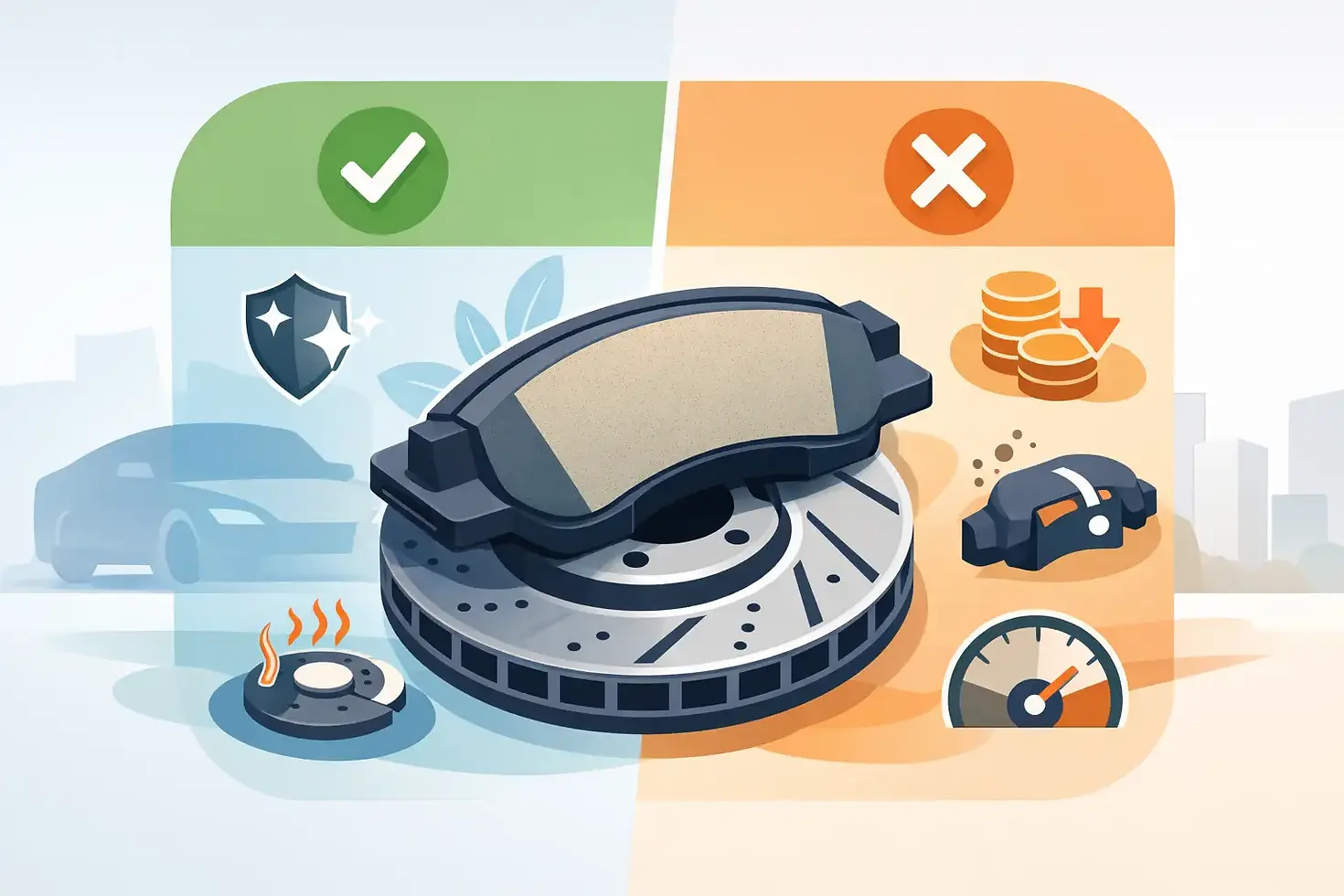
The main advantages are simple. Ceramic pads tend to be quieter, create finer and less visible dust, and deliver smooth braking for everyday driving. They also usually wear in a stable, predictable way. For drivers who want a cleaner wheel and less noise during the workweek, that matters.
The trade-offs are just as real. Ceramic pads often cost more up front. In some applications, they may not bite as aggressively as semi-metallic pads under extreme heat or heavy-duty use. They are excellent for many passenger vehicles, but "best" depends on how the vehicle is used.
Why many everyday drivers prefer ceramic pads
Most people are not driving on a racetrack. They are commuting, making school runs, heading to job sites, or stopping and going through city traffic. In that environment, ceramic pads have a lot going for them.
One of the biggest reasons is noise control. Ceramic pads are usually quieter than other pad types because the material damps vibration better. That does not mean they can never make noise. Poor installation, glazed rotors, worn hardware, or cheap parts can still cause squeaks. But all else being equal, ceramic pads are often the quieter option.
They also keep wheels cleaner. Brake dust from ceramic pads is typically lighter in color and finer in texture, so it is less noticeable than the darker dust many drivers see with semi-metallic pads. If you are tired of freshly washed wheels looking dirty again by the end of the week, this is one of the clearest benefits.
There is also the feel. Ceramic pads generally provide smooth, controlled braking in regular driving conditions. They do not usually feel grabby or harsh. That can make daily driving more comfortable, especially in stop-and-go traffic where the brake pedal gets a workout.
The real downsides of ceramic brake pads
The biggest downside for many customers is price. Ceramic pads usually cost more than economy-grade organic or some semi-metallic options. If you are only looking at the immediate invoice, they may seem like the expensive choice.
But price alone does not tell the whole story. A lower-cost pad that creates more dust, makes more noise, or wears unevenly can become frustrating fast. The better question is value over time, not just cost today.
Another drawback is performance under severe use. Ceramic pads are strong in normal street driving, but they are not always the top choice for extreme braking conditions. Vehicles that tow regularly, carry heavy payloads, or see aggressive driving may benefit more from a pad compound designed for higher heat and heavier loads.
Cold performance can also feel a little different depending on the vehicle and pad brand. Some ceramic pads need a moment to feel fully responsive compared with more aggressive compounds. For most commuters, this is not a deal-breaker. For drivers who want a very sharp initial bite, it can matter.
Ceramic vs semi-metallic brake pads
This is where most drivers get stuck, because both options are common and both can be good.
Semi-metallic pads typically contain a higher percentage of metal fibers. They handle heat well and often provide strong braking response, especially in tougher conditions. That is why they are common in performance applications and certain trucks or commercial uses. The downside is that they can be noisier, rougher on rotors, and more likely to create visible brake dust.
Ceramic pads, by comparison, are often the better fit for drivers who want quieter operation and a cleaner setup. They are usually gentler in day-to-day driving and better matched to passenger cars, crossovers, and SUVs that spend most of their time on city streets and highways.
This is not a case where one material wins every time. If you drive a family sedan to work, pick up groceries, and spend your weekends on normal errands, ceramic pads are often the smarter choice. If your vehicle is constantly under load or worked hard, a different pad type may be worth discussing.
Are ceramic brake pads worth the cost?
For many drivers, yes. But only if the pad quality is good and the brake job is done correctly.
Cheap ceramic pads can disappoint just like cheap versions of any other part. They may wear poorly, make noise, or fail to deliver the feel you expected. Good ceramic pads paired with proper rotor condition, quality hardware, and correct installation are what make the difference.
That is why pad material should never be the only thing you ask about. Ask whether the rotors are in good shape, whether hardware is being replaced as needed, and whether the repair is backed by a warranty. Those details affect performance just as much as the label on the box.
If your goal is lower dust, quieter braking, and dependable everyday performance, the extra cost of ceramic pads is often justified. If your vehicle sees hard commercial use or repeated heavy braking, the better value may be a different compound built for that workload.
When ceramic pads are a smart choice
Ceramic pads are usually a strong match for sedans, compact SUVs, minivans, and many crossovers used for normal commuting and family driving. They also make sense for drivers who care about comfort, low noise, and less mess on their wheels.
They can be a solid option for rideshare and delivery drivers too, especially if the vehicle is a standard passenger model operating in city traffic. Smooth performance and lower dust are useful when a vehicle stays on the road all week. But if that same vehicle is heavily loaded all day or driven aggressively, the recommendation can shift.
This is also where having a brake specialist matters. A vehicle’s weight, rotor size, factory brake design, and real-world use all affect what pad performs best. Two drivers can own the same model and still need different recommendations based on how they use it.
When ceramic pads may not be the best fit
If you tow often, haul equipment, drive in mountain conditions, or push your brakes hard on a regular basis, ceramic may not be your ideal setup. Some trucks, work vans, and high-demand vehicles benefit more from semi-metallic pads because of how they manage heat and load.
The same goes for drivers who want the strongest possible initial bite. Ceramic pads tend to feel refined rather than aggressive. Many people prefer that. Some do not.
There is also the budget reality. If you need the lowest possible upfront cost, ceramic pads may not be the first option you consider. Just be careful not to save money on parts and pay for it later in noise, dust, or shorter service life.
What matters more than pad material alone
Brake pad choice matters, but brake condition matters more. Even the best ceramic pads will not perform well with warped rotors, seized calipers, worn clips, or contaminated brake fluid.
A proper brake service should look at the full system, not just the pads. That includes rotor condition, hardware, caliper function, and overall wear pattern. Skipping those checks is how people end up blaming the pad material for problems caused somewhere else.
That is also why many customers prefer working with a brake-focused company instead of treating brake service like a quick add-on. When the diagnosis is clear and the repair is done right the first time, the vehicle feels better immediately and stays safer longer.
For everyday drivers, the ceramic brake pads pros and cons usually come down to this: they are quieter, cleaner, and well-suited for normal street use, but they cost more and are not the top answer for every heavy-duty situation. If you want a brake setup that fits your real driving, not just a generic recommendation, it pays to ask a specialist who will explain the trade-offs clearly and make the repair easy. That is exactly why Brakes Stop & Go uses ceramic pads on every vehicle we service.
When your brakes are talking to you, the best move is not guessing. It is getting the right setup for how you actually drive, so the next stop feels quiet, confident, and routine.


Comments