Ceramic Brake Pads: Are They Worth It?

That black film on your wheels, the squeal at stoplights, the nagging feeling that your brakes should feel better than they do - those are usually the moments drivers start asking about ceramic brake pads. Not because they want race-car parts, but because they want cleaner wheels, quieter braking, and parts that hold up well in everyday driving.
For most daily drivers, ceramic brake pads make sense. They are built for consistent, low-noise braking and they tend to create less visible brake dust than many other pad types. They also handle heat well in normal driving, which helps them stay predictable in traffic, on errands, and during long commutes. That said, the right brake pad still depends on the vehicle, how it is driven, and what matters most to the owner.
What ceramic brake pads actually do
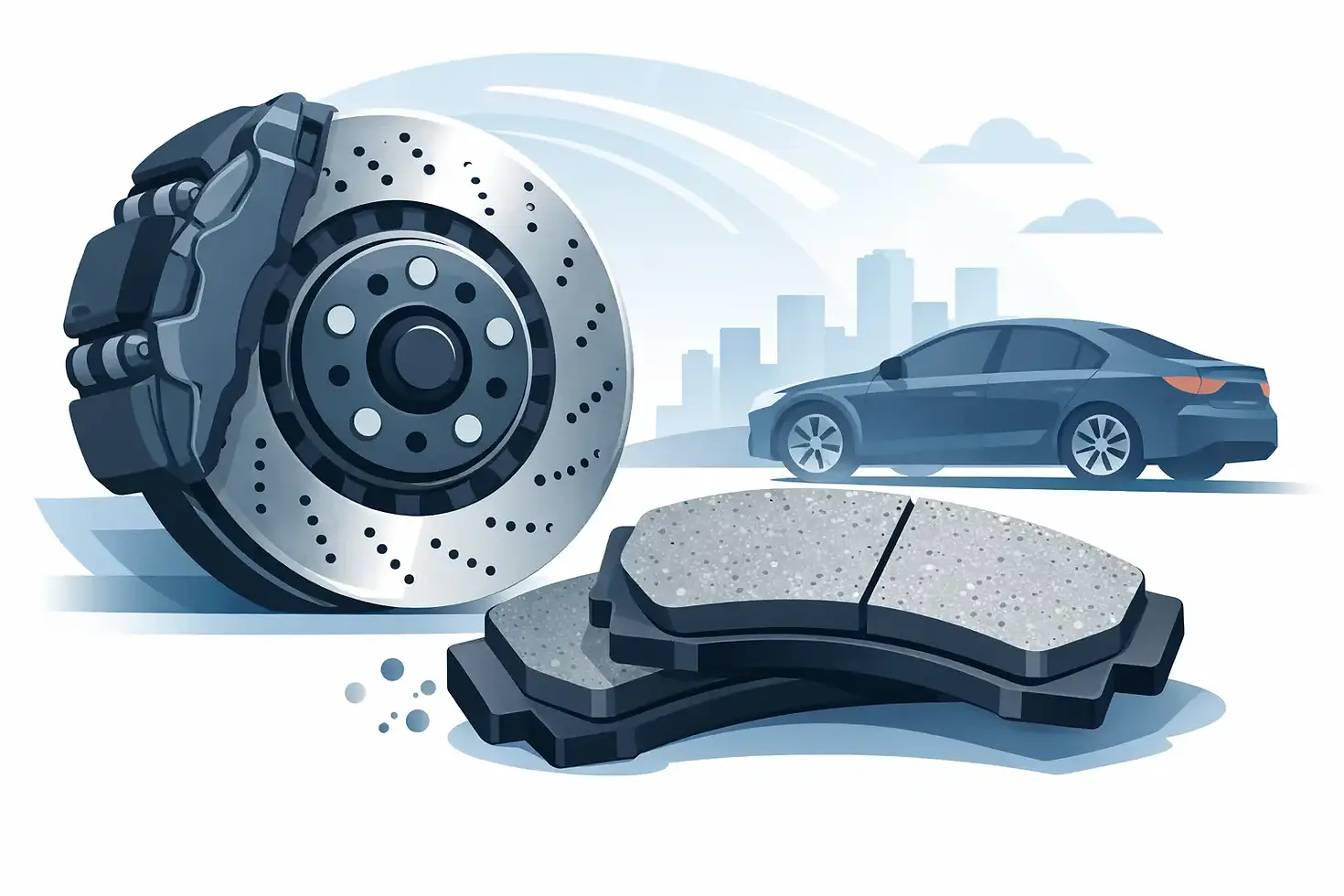
Ceramic brake pads are made with a dense friction material that usually includes ceramic fibers, bonding agents, and small amounts of metal. The goal is simple: create steady braking power without the noise and heavy dust many drivers associate with older pad materials.
In day-to-day use, that usually translates to a smoother experience. You press the pedal, the vehicle slows down predictably, and you are less likely to deal with the high-pitched squeak that makes every stop feel like a warning sign. They also tend to wear in a way that produces finer, lighter-colored dust, so your wheels often stay cleaner longer.
That is a big reason ceramic pads are so common on passenger cars, SUVs, and crossovers. Most people are not trying to squeeze maximum braking force out of every stop. They want dependable stopping power, low mess, and less noise. Ceramic pads are designed around that reality.
Why so many drivers prefer ceramic brake pads
The biggest advantage is balance. Ceramic brake pads are not just about one feature. They offer a mix of comfort, cleanliness, and reliable braking that fits the way most people actually drive.
Noise is usually the first thing people notice. A quality ceramic pad setup is often quieter than cheaper alternatives, especially when matched with good rotors and installed correctly. That matters if you spend a lot of time in Atlanta traffic, in school pickup lines, or driving for work. Constant squealing gets old fast.
Dust is another major selling point. Some pad materials throw off dark dust that sticks to wheels and makes a clean vehicle look neglected after a few days. Ceramic pads usually create less of that visible buildup. If you care about how your car looks, or you are managing multiple vehicles and want less cleanup, that benefit is real.
Then there is everyday drivability. Ceramic pads generally provide smooth, predictable pedal feel for commuting and regular city driving. They are less about harsh bite and more about controlled response. For a family sedan, a compact SUV, or a work vehicle doing routine stops, that can be exactly what you want.
Where ceramic pads may not be the best fit
This is where the sales pitch usually gets too simple. Ceramic is often a strong choice, but not every vehicle or driving style calls for the same pad.
If you tow heavy loads often, drive aggressively, or put your vehicle through repeated hard braking, another friction material may be worth considering depending on the application. Some drivers prefer pads with a more aggressive initial bite. Others need braking performance geared toward heavier duty use. In those cases, pad selection should be based on the actual workload, not just the label on the box.
Price also matters. Ceramic pads often cost more than basic organic pads up front. For many drivers, the cleaner operation and longer-lasting overall feel make that extra cost worthwhile. But if someone is choosing based on the lowest immediate price, ceramic may not be the cheapest option.
The key is to think beyond the part itself. The best brake pad is the one that matches the vehicle, the rotor condition, and the way the vehicle is used every week.
Ceramic brake pads vs. semi-metallic pads
This is the comparison most drivers are really asking about.
Semi-metallic pads usually contain a higher amount of metal, which can help with heat transfer and braking performance under tougher conditions. They are common for trucks, performance applications, and vehicles that see heavier use. But they can also be noisier, create more brake dust, and feel rougher in everyday driving.
Ceramic brake pads are generally quieter and cleaner. They are often the better fit for commuters, family vehicles, and drivers who want a more refined feel. They do not usually win on raw heavy-duty reputation, but for normal road use, they are often the more comfortable choice.
That does not make one type universally better. It means each type has a job. For the average driver going from home to work, school, appointments, and back, ceramic often lines up better with what they actually want from their brakes.
Brake performance depends on more than the pad
A lot of people assume replacing the pad material alone will fix every braking issue. Sometimes it does. Sometimes it does not.
Rotors matter. If the rotor surface is worn, grooved, heat-spotted, or too thin, even a high-quality ceramic pad will not perform the way it should. Brake hardware matters too. Sticking slide pins, worn shims, and uneven caliper movement can all create noise, uneven wear, or poor stopping feel.
Brake fluid also plays a role. Old fluid can affect brake response, especially when moisture contamination builds over time. And of course, tires matter more than most people think. Brakes slow the wheel, but the tire is what grips the road.
That is why good brake service starts with a real inspection, not a guess. If a vehicle is pulling, grinding, vibrating, or taking longer to stop, the pad type is only one piece of the answer.
How long ceramic brake pads usually last
There is no honest one-size-fits-all number. Driving habits, traffic conditions, vehicle weight, rotor condition, and pad quality all affect lifespan.
That said, ceramic pads are often known for solid longevity in regular driving. A commuter who does mostly smooth highway miles may get much more life out of a set than a driver who spends every day in stop-and-go traffic. A rideshare vehicle or fleet car that is constantly braking in city conditions will wear pads faster, even if the material is high quality.
The better question is not just how many miles they can last. It is whether they stay consistent and usable over time. Good ceramic pads often do. They tend to age well in normal service, which is part of why many drivers feel the value is there.
Signs it is time to have your brakes checked
If you hear grinding, do not wait. That can mean the friction material is gone and metal is contacting the rotor. Squealing does not always mean immediate failure, but it does mean it is time for an inspection.
You should also pay attention to shaking while braking, a soft pedal, longer stopping distances, or a vehicle that pulls to one side. Those symptoms can point to pad wear, rotor problems, hydraulic issues, or uneven brake operation. The longer they are ignored, the more expensive the repair can become.
For busy drivers, that is the real cost of delay. Not just safety risk, but turning a straightforward brake job into rotors, calipers, or more downtime than necessary.
Why installation quality matters as much as the parts
Even the best ceramic brake pads can disappoint if the install is rushed. Proper brake service includes inspecting the whole system, preparing the mounting surfaces, servicing hardware where needed, and making sure the pads and rotors work together correctly.
There is also the bedding-in process. New pads need a proper break-in so the friction material transfers evenly to the rotor surface. Skip that step, and you can end up with noise, uneven braking, or reduced performance.
That is one reason many drivers would rather have brake work handled by a specialist than gamble on the cheapest option. Good parts help. Correct diagnosis and installation are what make them perform the way they should.
For a lot of Atlanta drivers, ceramic brake pads are worth it because they solve the problems people notice most - noise, dust, and inconsistent everyday feel. They are not magic, and they are not the right answer for every vehicle in every situation. But for normal commuting and family driving, they are often the smart middle ground between comfort, performance, and long-term value.
If your brakes have started making noise, your wheels are always coated in dust, or your stopping feel is not what it used to be, it is a good time to have them checked before a small issue turns into a bigger one.


Comments