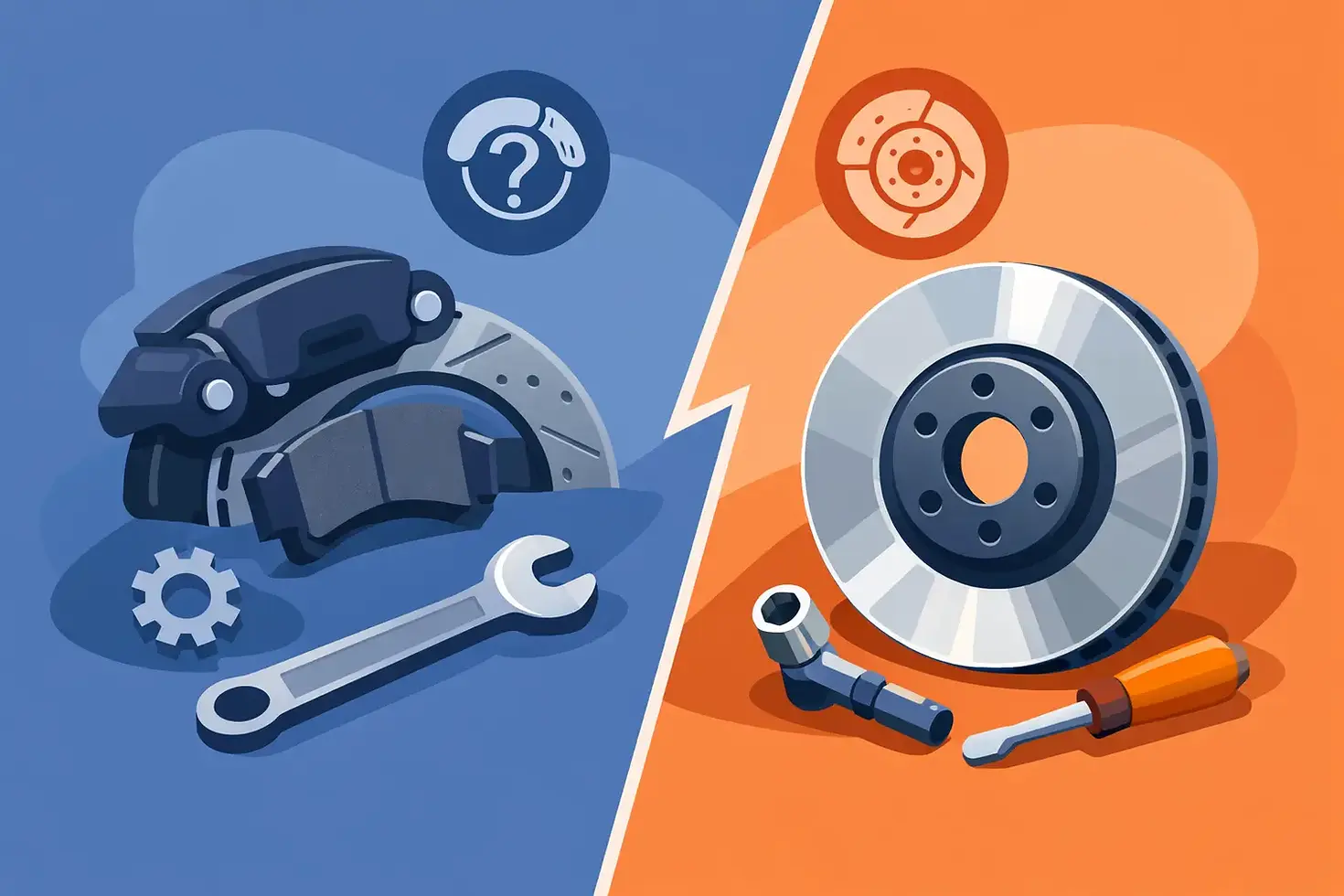
Brake Repair or Rotor Replacement?

That scraping sound usually shows up at the worst time - on the way to work, during school pickup, or right before a full weekend schedule. If you are trying to figure out whether you need brake repair or rotor replacement, the key is not guessing and hoping it goes away. Brake problems rarely get cheaper, quieter, or safer with time.
For most drivers, the real question is simple: are the pads worn, are the rotors damaged, or is it both? The answer depends on what your car is doing when you brake, how long the problem has been going on, and whether the braking surfaces are still in good condition. A quick inspection can tell the difference, but it helps to know what signs point where.
Brake repair or rotor replacement: what is the difference?
Brake repair is a broad term. It can mean replacing brake pads, servicing calipers, correcting uneven wear, flushing brake fluid, or addressing noise and reduced stopping performance. Rotor replacement is more specific. It means removing the metal brake discs that your pads clamp onto and installing new ones because the old rotors are too worn, warped, cracked, or damaged to keep using safely.
That matters because not every brake issue means you need new rotors. Sometimes the fix is straightforward - worn pads, a hardware issue, or brake fluid that has broken down. Other times, the pads have worn too far and started grinding into the rotors, which turns a smaller job into a larger one.
If your vehicle shakes when braking, makes a grinding noise, or takes longer to stop, rotor condition should be checked right away. If you only hear a light squeal and your stopping power still feels normal, the problem may be limited to the pads or related brake components. The only safe way to know is inspection.
Signs you may need brake repair
Most brake systems give you warning signs before they fail. The trick is paying attention early enough to avoid added damage.
A high-pitched squeal is one of the most common signs of worn brake pads. Many pads include a wear indicator that makes noise on purpose when pad material gets low. That sound is your early warning. At that stage, you may only need pad replacement and a full brake check.
A soft or spongy brake pedal points in a different direction. That can mean air in the lines, old brake fluid, or a hydraulic issue. In that case, rotor replacement may have nothing to do with the problem. The fix could involve fluid service or a deeper inspection of the braking system.
If your car pulls to one side while braking, you could be dealing with uneven pad wear, a sticking caliper, or contamination on one side of the brake system. Again, that is brake repair, but not automatically rotor replacement.
The reason these symptoms matter is simple. Drivers often assume every brake problem needs a full replacement. Sometimes that is true. Sometimes it is not. Good service means replacing what is worn and not selling what is not needed.
When rotor replacement is the right move
Rotors wear every time you brake. Over time, heat and friction thin the metal surface. That wear is normal, but rotors cannot be used forever.
If you feel vibration in the steering wheel or brake pedal when slowing down, warped or uneven rotors are a common cause. If you hear grinding, there is a good chance the brake pads are worn down far enough that metal is contacting the rotor surface. That can leave deep grooves and damage the rotor beyond reuse.
Visible scoring, heat spots, cracks, and excessive rust on the braking surface also point toward replacement. In some cases, a rotor can be resurfaced, but many modern rotors are made thinner than older designs and do not leave much room for machining. If a rotor is already near or below minimum thickness, replacement is the safer call.
This is where the it-depends part matters. Some drivers ask if they can replace pads only and keep the old rotors. Sometimes yes, but only if the rotors are still in spec, smooth, and wearing evenly. If not, new pads on bad rotors can wear out faster, make noise, and deliver poor braking performance. Saving money upfront can cost more a few weeks later.
Pads and rotors often wear together
In real-world service, brake pads and rotors often end up being replaced at the same time. That is especially true if the pads were worn too long or if the rotors already have measurable wear when the job starts.
Think of it this way: pads and rotors work as a matched surface. When one part is badly worn, it affects the other. Installing fresh pads against damaged rotors can create uneven contact, vibration, and reduced stopping confidence. Replacing both at once gives you a clean braking surface and more predictable performance.
That does not mean every brake service should automatically become a full front or rear brake overhaul. It means the condition of each part should guide the repair. Honest diagnosis matters more than a one-size-fits-all package.
What causes rotors to wear out faster?
Driving habits and vehicle use play a big role. Stop-and-go commuting around Metro Atlanta puts more heat into your brakes than steady highway driving. So does carrying heavy loads, driving for rideshare, or operating a fleet vehicle that spends all day in traffic.
Late pad replacement is another major cause. Once the friction material gets too thin, the backing plate can contact the rotor. That metal-on-metal contact can destroy a rotor quickly.
Heat is also hard on brake components. Repeated hard stops can create hot spots or uneven rotor wear. Cheap pad materials can add to the problem by creating more dust, more noise, or inconsistent wear. That is one reason quality parts matter. Better friction material can support cleaner, quieter, more stable braking over time.
Why quick diagnosis saves money
Waiting usually turns a smaller brake issue into a bigger one. Worn pads can become damaged rotors. A sticking caliper can overheat one side and wear everything unevenly. Brake fluid problems can reduce performance and put added stress on the whole system.
The earlier you catch the issue, the more options you usually have. That may mean standard brake repair instead of rotor replacement. It may mean replacing one worn set before other components are affected. It may also mean avoiding the safety risk of pushing a failing brake system too far.
For busy drivers, delay often has nothing to do with ignoring safety. It is usually about time. Getting to a shop, waiting for inspection, arranging a ride, and losing half a day is enough to make people put it off. Mobile brake service solves that problem by bringing the inspection and repair to your home or workplace.
What to expect from a professional brake inspection
A proper inspection should look at more than pad thickness. The technician should check rotor condition, hardware, caliper operation, brake fluid condition, and overall wear patterns. Uneven wear tells a story. So do heat marks, grooves, and pedal feel.
You should also get a clear explanation in plain language. If the rotors are reusable, you should be told that. If they are too worn or damaged, you should hear why. Good service is not about making the job sound more complicated. It is about showing you what is needed to restore safe braking.
For many customers, that clarity matters as much as the repair itself. No waiting. No towing. No hassle. Just a straightforward answer and a fix that matches the condition of the vehicle.
Brake repair or rotor replacement for Atlanta drivers
In a city where traffic is constant and schedules are tight, brake issues need to be handled quickly and correctly. Commuters, parents, rideshare drivers, and fleet managers do not have time for vague answers or unnecessary shop delays. They need braking problems diagnosed where the vehicle is parked and repaired without disrupting the day.
That is why a focused brake service model makes sense. A company like Brakes Stop & Go is built around this exact situation - mobile brake diagnosis and repair with clear pricing, ceramic brake pads, and warranty-backed work delivered on-site. For customers, that means less downtime and fewer excuses to keep driving on a bad brake system.
If your brakes are squealing, grinding, vibrating, or just not feeling right, do not try to sort it out by sound alone. Pads, rotors, fluid, and hardware can all create similar symptoms from the driver seat. The smart move is to get the system inspected before a manageable repair turns into a larger one.
Your brakes do not need your attention someday. They need it when they start talking.


Comments