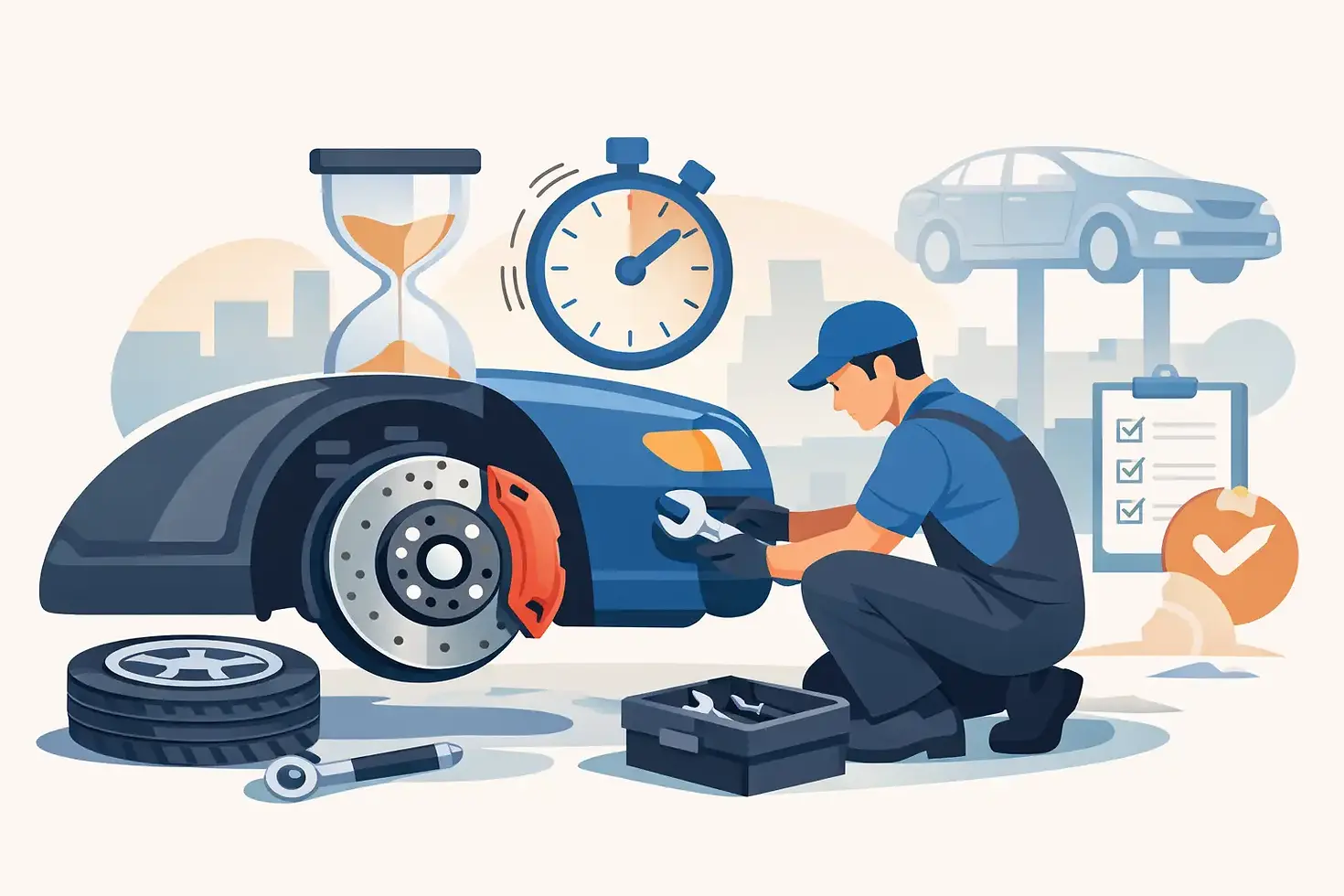
Brake Repair in My Area Without the Wait

That brake squeal usually starts at the worst possible time - on the school run, in traffic on I-285, or right before you head into work. If you are searching for brake repair in my area, you probably do not want a long explanation or a half-day at a shop. You want to know what the noise means, whether the car is safe to drive, and how fast you can get it fixed.
That is exactly where a local mobile brake service makes sense. Instead of rearranging your day around a repair shop, the repair comes to you. For drivers across Metro Atlanta, that can mean getting brake service in a driveway, office parking lot, or fleet yard without towing, waiting rooms, or the usual disruption.
What "brake repair in my area" should really mean
A lot of drivers type that phrase into a search bar when something feels off - grinding, shaking, a soft pedal, a warning light, or a car that simply takes too long to stop. But the best option is not always the closest shop on a map. What matters more is whether the service is actually built around your problem.
Brake work is not one-size-fits-all. Sometimes the fix is straightforward, like worn pads and rotors. Sometimes the issue is hydraulic, such as old brake fluid or a soft pedal caused by air in the system. In other cases, the brakes are not the root cause at all. Tire condition, suspension wear, and uneven rotor surfaces can create symptoms that feel similar from the driver seat.
So when you look for brake repair nearby, convenience matters, but expertise matters just as much. You need clear diagnosis, quality parts, honest recommendations, and a repair process that does not waste your time.
Signs you may need brake repair in my area now
Some brake problems can wait a day or two for scheduling. Others should be checked as soon as possible. The difference usually comes down to what the vehicle is doing and how quickly the symptom is getting worse.
If you hear a high-pitched squeal, your brake pads may be wearing down. That sound is often an early warning. If you hear grinding, the situation is more urgent. Grinding can mean the pad material is gone and metal is contacting the rotor. At that point, delaying service often turns a smaller repair into a more expensive one.
A vibrating steering wheel or pulsing brake pedal can point to rotor wear or heat-related warping. A soft or spongy pedal may suggest a brake fluid issue or air in the lines. If the vehicle pulls to one side while braking, one side may be doing more work than the other. That affects stopping distance and control.
Then there are the signs drivers tend to ignore because the car still moves. Longer stopping distances, a burning smell after braking, or the need to press the pedal harder than usual are not minor changes. Those are warning signs that the system is not working the way it should.
Why mobile brake service fits how people actually live
Traditional repair shops were built around the idea that you bring the vehicle to them, wait your turn, and adjust your schedule. That model still works for some repairs. But for brake service, especially when the issue is urgent and the car may not be ideal to drive far, mobile service solves a real problem.
If you are a commuter, you do not need to burn a vacation morning sitting in a lobby. If you are a parent, you do not need to move car seats and juggle rides just to replace pads and rotors. If you run a small business or manage fleet vehicles, you do not need multiple units off the road all day for work that can be done on-site.
That is why mobile brake repair has become a practical choice, not a backup option. The convenience is obvious, but the bigger benefit is control. You choose the location. You know when the technician is coming. You get the work done without adding another errand to your day.
What to expect from a quality brake service
The best brake service is straightforward. First comes the diagnosis. That means identifying whether you need brake pads, rotors, brake fluid service, or another repair tied to system performance. Good service should not start with guesswork.
Next comes a clear explanation. You should know what is worn, what still has life left, and what the repair is expected to cost before the job starts. This matters because brake recommendations can vary. Not every vehicle needs the same parts at the same time, and not every symptom means a full brake overhaul.
Quality parts also matter. Ceramic brake pads are a strong option for many vehicles because they are quieter, cleaner, and built for dependable everyday use. They may not be the right answer in every edge case, but for most daily drivers they provide a solid balance of performance and value.
A warranty is another signal that the company stands behind its work. When a brake repair includes warranty coverage, it gives customers more confidence that the service was done right and that support is there if a problem comes up later.
The real trade-off: shop visit versus on-site repair
There is no need to pretend every repair is better mobile. Some large mechanical jobs belong in a full shop with lifts, specialized equipment, and all-day access to the vehicle. But brake service is different. Pads, rotors, fluid flushes, and many common brake repairs can be handled efficiently on-site when the technician is prepared and the service is organized well.
For most drivers, the trade-off comes down to one question: do you want to spend time getting the car to the repair, or do you want the repair brought to the car?
If your brakes are making noise but the car is still drivable, mobile service saves time. If the brakes feel unsafe, mobile service may be the smarter option because it reduces the need to drive farther than necessary. And if you manage fleet vehicles, on-site scheduling can reduce downtime in a way that standard shop appointments often cannot.
How to choose the right local brake repair provider
When comparing providers, speed alone is not enough. Fast service only helps if the work is accurate and the pricing is clear.
Look for a company that specializes in brake work rather than treating it like a side service. Ask whether diagnosis is part of the visit, what parts are used, whether there is warranty coverage, and how pricing is explained. If the company offers mobile service, find out where they can meet you and what kinds of vehicles they handle.
Payment flexibility matters too. Brake problems are rarely convenient, and they are almost never planned. A provider that accepts cards, digital payments, and financing options makes it easier to handle urgent repairs without putting safety on hold.
Drivers in Metro Atlanta often need exactly that kind of practical service. Brakes Stop & Go is built around this model - focused brake expertise, on-site repairs, ceramic brake pads, transparent starting prices, and a 12-month/12,000-mile warranty. No waiting. No towing. No hassle.
When to stop searching and book the repair
If your brakes are squealing, grinding, shaking, pulling, or taking longer to stop the vehicle, the search has already served its purpose. You know something is wrong. The next step is not more scrolling. It is getting the issue checked before it gets worse.
The good news is that brake service does not have to turn into a full-day problem. With the right local provider, you can get diagnosis and repair where you are, on a schedule that works, with clear communication from start to finish.
A good brake repair experience should feel simple. You notice the problem, book the appointment, get the repair, and move on with your day. That is the standard drivers should expect, especially when the service is tied so directly to safety.
If you are looking for brake repair in my area, choose the option that respects both your time and your vehicle. Safe brakes matter, but so does getting back to your day without the usual runaround.


Comments