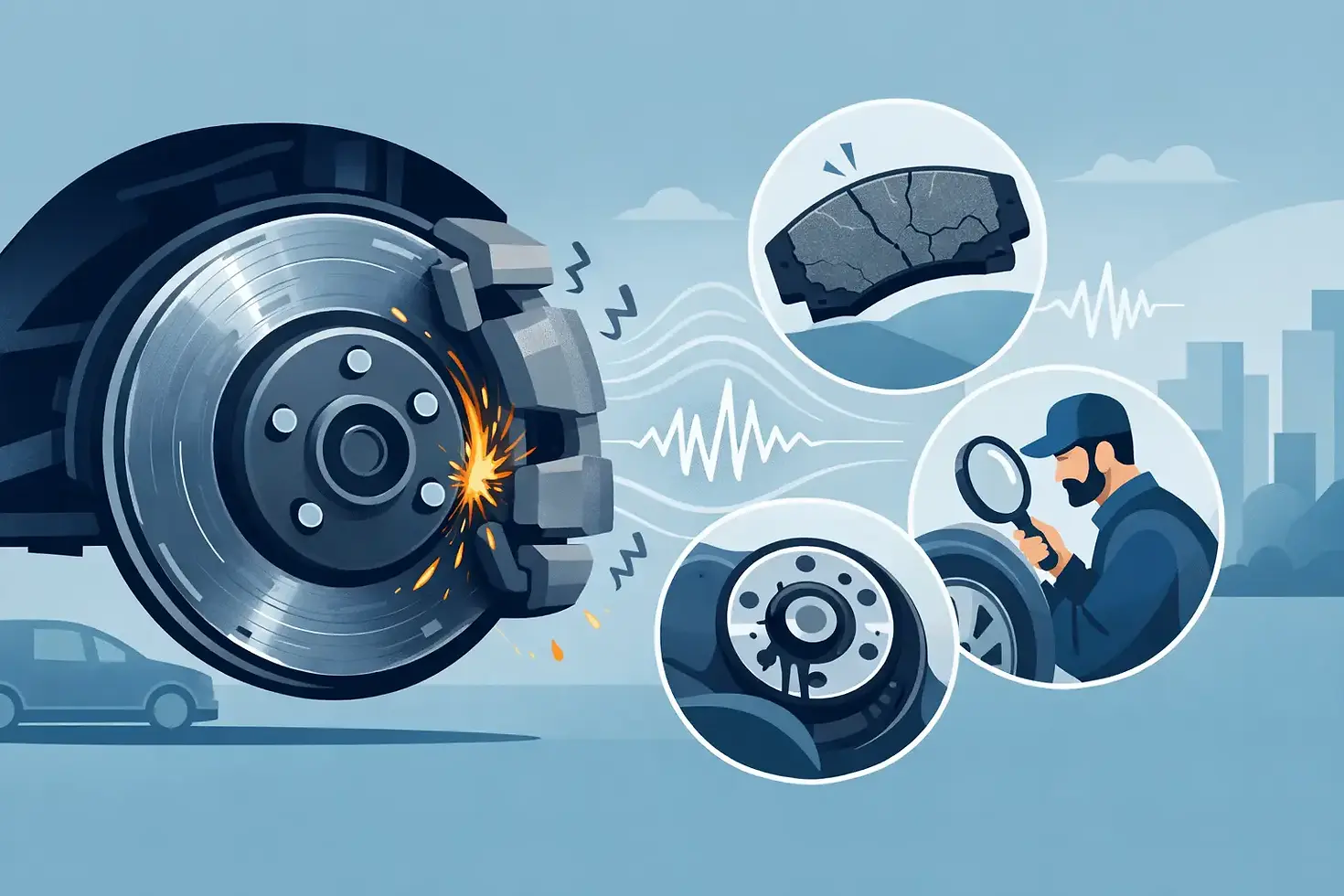
Brake Grinding Sound Causes Explained

That harsh metal-on-metal noise usually means the problem has already gone past the "wait and see" stage. When drivers search for brake grinding sound causes, they are usually dealing with more than an annoyance. They are hearing a warning that something in the brake system needs attention before it turns into a bigger repair, longer downtime, or an unsafe drive.
Grinding brakes do not always point to the exact same failure. Sometimes the fix is straightforward, like worn brake pads. Other times the sound comes from damaged rotors, stuck hardware, or debris caught between components. The key is not guessing. The key is knowing what the sound often means and how quickly you need to act.
The most common brake grinding sound causes
The most common cause is worn-out brake pads. Brake pads are built with friction material that presses against the rotor to slow your vehicle. Once that material wears down too far, the metal backing plate can contact the rotor. That creates the grinding sound drivers notice during braking. At that point, the repair often goes beyond just replacing pads because the rotor may already be damaged.
Another common issue is brake pads worn down to the wear indicator. Some pads are designed with a small metal tab that makes noise when the pad is getting low. Drivers often describe that sound as scraping or grinding. It is an early warning, but if you keep driving, it can become true metal-on-metal grinding very quickly.
Rust and corrosion can also create grinding sounds, especially if the vehicle sits for extended periods or is exposed to moisture. A light layer of surface rust on the rotors may clear up after a few normal stops. Heavier rust buildup, though, can leave the rotor surface uneven and noisy. In that case, the sound may come and go, especially first thing in the morning or after rain.
Debris is another possibility. Small rocks, road grit, or other material can get trapped between the backing plate and rotor. That can create a sharp grinding or scraping noise that seems to appear suddenly. The good news is that this problem may be less serious than worn-out brakes. The bad news is that the sound can mimic a major brake failure, so it still needs inspection.
A sticking brake caliper is another cause that can do real damage fast. If the caliper does not release properly, the pad may stay pressed against the rotor longer than it should. That creates excess heat, uneven wear, and grinding. Drivers may also notice a burning smell, pulling to one side, or one wheel getting hotter than the others.
Worn or damaged rotors can also be behind the noise. Rotors need a smooth, even surface. If they become deeply scored, warped, cracked, or too thin, the pads cannot make proper contact. That can create grinding, vibration, and reduced stopping performance. Sometimes the pad wear caused the rotor problem. Sometimes a bad rotor accelerates pad wear. Usually, both parts need to be looked at together.
Why the sound matters more than people think
A lot of drivers hope brake noise will go away on its own. Sometimes a minor scrape from moisture or debris does clear up. True grinding usually does not. It tends to get worse, and it tends to get more expensive.
Brake pads are designed to be replaced before they damage other components. If you keep driving after the friction material is gone, the rotor can be gouged. Then the repair may involve both pads and rotors instead of pads alone. In more severe cases, overheated or seized parts can affect calipers and hardware too.
There is also the safety side. Grinding can reduce braking performance, especially in hard stops or wet conditions. That matters even more in Atlanta traffic, where stop-and-go driving puts constant demand on the brake system. If your brakes are already compromised, a short commute can become a risky one.
When the grinding happens tells you something
If the grinding only happens when you press the brake pedal, worn pads or rotor damage move to the top of the list. That is the classic pattern. The sound lines up directly with braking force.
If the grinding happens while driving even when you are not braking, the issue may be different. A stuck caliper, a backing plate contacting the rotor, or debris caught in the brake assembly become more likely. Wheel bearing issues can also make noise that some drivers mistake for brake grinding, so it helps to have the system checked rather than assume.
If the sound happens only first thing in the morning, especially after rain or overnight humidity, surface rust may be involved. Light rust often clears after a few stops. If the grinding stays or returns daily, it is time to inspect the brakes more closely.
If the sound appears right after recent brake work, that can point to improper installation, low-quality parts, missing hardware, or components that were not replaced together. Brake repairs need the right fit and proper hardware setup to stay quiet and work correctly.
Brake grinding sound causes that need immediate attention
Some situations call for stopping the vehicle as soon as it is safe. If the grinding is loud and constant, if the brake pedal feels soft or unusually hard, if the vehicle pulls during braking, or if you see a brake warning light, do not keep driving like normal. The same goes for a burning smell near a wheel or smoke coming from the brake area.
Those signs can mean severe pad wear, a seized caliper, or overheating parts. Continuing to drive can increase repair costs and raise the risk of brake failure. No appointment is worth pushing through a dangerous brake issue.
What a proper diagnosis should include
A real brake inspection should go beyond a quick look through the wheel. The technician needs to inspect pad thickness, rotor condition, caliper operation, brake hardware, and the overall wear pattern from side to side. Uneven wear often tells the bigger story. One pad may be worn out while the other still has material left, which points to sticking components rather than normal wear alone.
Brake fluid condition can matter too. While old fluid does not usually create grinding by itself, poor hydraulic performance can contribute to braking issues and should not be ignored during a full inspection.
This is also where part quality matters. Cheap friction materials can create more noise and dust, and lower-grade components may wear faster under heavy city driving. For drivers who spend a lot of time commuting, making deliveries, or running fleet vehicles, that difference adds up.
Can you keep driving with grinding brakes?
The honest answer is maybe for a very short distance, but that does not mean you should. If the sound is true grinding, damage is likely already happening. Every extra mile can cut deeper into the rotor, overheat surrounding parts, and push the repair bill up.
There is a difference between moving the car to a safer location and continuing your week as usual. If you hear grinding, the smart move is to limit driving and get the brakes inspected as soon as possible. No waiting. No towing if you can avoid it. No hassle is the goal, but fast action is what keeps a brake problem from turning into a larger one.
How to prevent brake grinding in the first place
Most grinding problems start earlier as squeaking, scraping, vibration, or reduced brake response. Catching those signs early is what saves money. Waiting until the brakes are grinding usually means the simplest repair window has already passed.
Routine inspections help, especially for drivers who deal with heavy traffic, steep parking decks, frequent short trips, or long idle-and-brake cycles. Those conditions wear brakes faster than many people expect. Fleet vehicles and rideshare cars are especially prone to accelerated brake wear because they spend so much time stopping and starting.
Driving habits matter too. Hard braking, carrying heavy loads, and ignoring small noises all shorten brake life. Good parts also make a difference. Quality ceramic pads, for example, generally produce less dust and can provide quieter, more consistent braking for many daily drivers.
If you want to avoid downtime, the best approach is simple: pay attention to early noise, have the system checked before metal contacts metal, and replace worn components before they damage the rest of the brake assembly. For busy drivers around Metro Atlanta, mobile brake service from a focused provider like Brakes Stop & Go can make that a lot easier because the repair happens where your day is already happening.
Grinding brakes are not subtle, and that is actually useful. Your vehicle is telling you not to put this off. The sooner you act, the more likely the fix stays manageable, affordable, and safely behind you.


Comments