7 Brake Pad Replacement Warning Signs

That high-pitched squeal when you back out of the driveway is easy to ignore once. The second or third time, it is usually your car telling you something. Brake pad replacement warning signs rarely show up all at once. They tend to start small, then get louder, rougher, and more expensive if you wait too long.
If you drive in Metro Atlanta traffic every day, your brakes work hard. Stop-and-go commuting, school pickup lines, delivery routes, and rideshare miles all wear brake pads down faster than many drivers expect. Knowing what to look and listen for can help you catch the problem early, stay safer on the road, and avoid damage to your rotors and calipers.
The most common brake pad replacement warning signs
Brake pads are built to wear down over time. That is normal. The issue starts when worn pads no longer create enough cushioning between the brake rotor and the metal backing plate. Once that happens, braking performance drops and repair costs can climb.
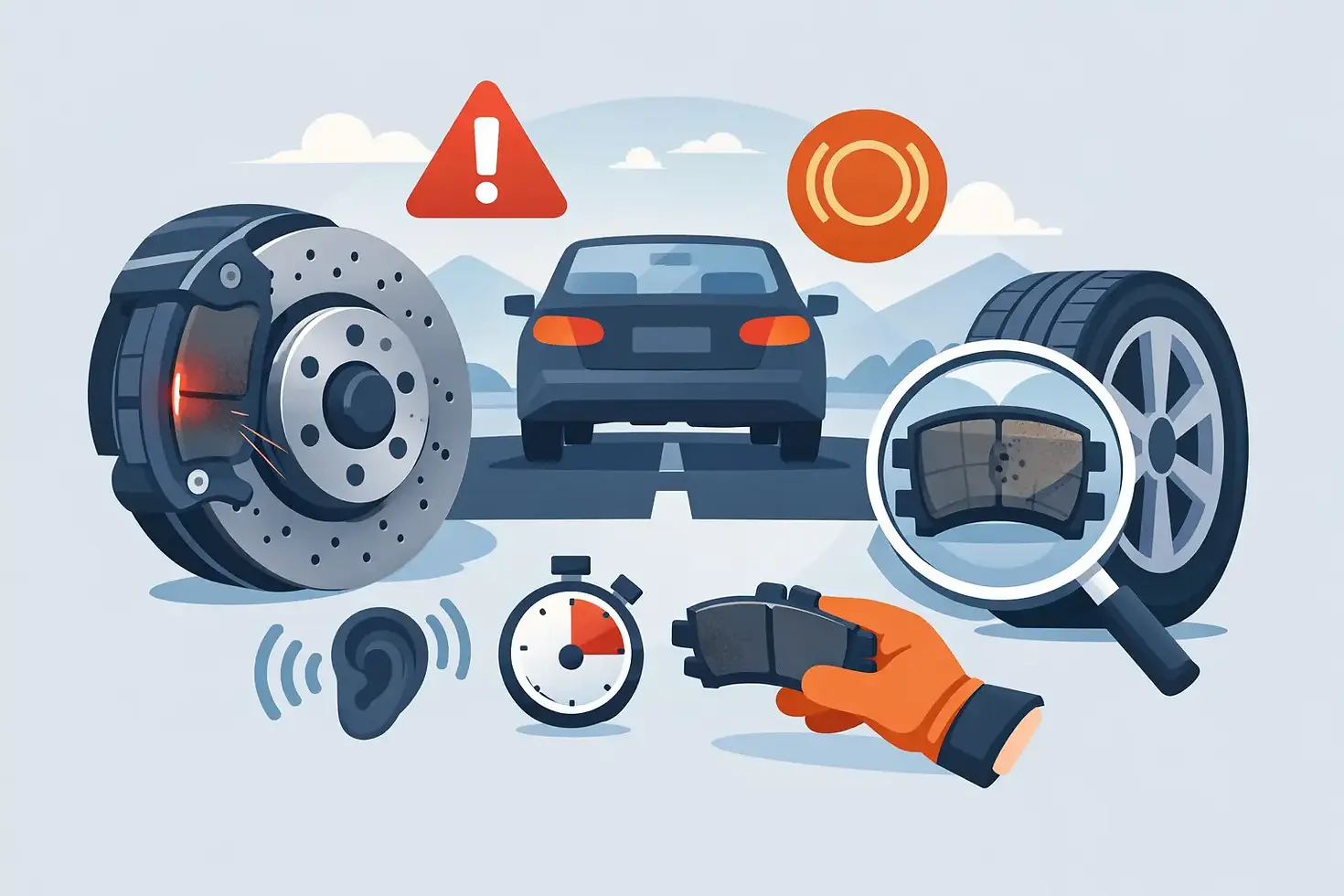
One of the clearest signs is squealing or screeching when you brake. Many pads are designed with a small wear indicator that makes noise when the pad material gets too thin. It is not subtle, and that is the point. If the sound happens regularly during normal braking, your pads may be close to the end of their usable life.
Grinding is more serious. A grinding noise often means the pad material is worn away so far that metal is contacting metal. At that stage, you are not just looking at new pads. You may also need rotors, and in some cases additional brake hardware if the wear has been ignored too long.
Longer stopping distance is another major warning sign. If your vehicle seems to need more space to slow down, especially in regular dry conditions, worn pads may be part of the problem. Brakes should feel responsive. If they do not, it is time for an inspection.
A brake pedal that feels soft, shaky, or less predictable also deserves attention. Some vibration can point to rotor issues, but worn pads often show up alongside uneven rotor wear. If the pedal pulses when you brake, do not assume it will work itself out.
When the feel of the car changes
Not every brake issue starts with noise. Sometimes the first clue is how the car behaves when you stop.
If your vehicle pulls to one side during braking, one side may be wearing differently than the other, or one brake component may not be applying evenly. That does not always mean the pads alone are the problem, but it often starts a brake inspection conversation.
You may also notice a harsher braking feel. Instead of smooth, controlled stopping, the car may feel jerky or uneven. Drivers who spend a lot of time in traffic usually notice this quickly because they brake so often. If your commute feels different, trust that instinct.
Another sign is brake dust that suddenly seems heavier than usual on one or more wheels. Some dust is normal, especially depending on pad type and driving conditions. But excessive dust on one wheel can point to uneven pad wear or a sticking component that is causing more friction than it should.
Warning lights matter, but they are not the whole story
Some vehicles have brake warning lights that can alert you to a problem. If that light comes on, do not wait around hoping it resets on its own. Get the system checked.
That said, not every worn pad will trigger a dashboard warning right away. Plenty of drivers have seriously worn pads with no light at all. That is why sounds, feel, and stopping performance matter just as much as what the dashboard says.
Why drivers put it off - and why that gets expensive fast
Most people do not delay brake service because they do not care. They delay it because life is busy. Work starts early. School pickup runs late. The shop says you need to leave the car for half a day. So the squeal gets pushed to next week.
The problem is that brake pad wear does not stay in the brake pad category for long. Catch it early, and you may only need pads. Wait too long, and rotor resurfacing or replacement may enter the picture. Keep going after grinding starts, and costs can rise even more.
There is also the safety side. Worn pads reduce braking confidence when traffic suddenly stops, when rain slicks the road, or when you need to react fast. In Atlanta driving, that extra margin matters.
Brake pad replacement warning signs that depend on driving habits
Not every vehicle wears pads at the same rate. A car used mostly for short city trips will often go through pads faster than one driven mainly on open highways. A rideshare driver, delivery driver, or fleet vehicle in constant traffic can see brake wear much sooner than a weekend driver.
Vehicle weight matters too. SUVs, trucks, and vans may put more load on the brake system, especially when carrying passengers, tools, or cargo. Aggressive braking also shortens pad life. So does riding the brakes downhill or creeping in heavy traffic with constant brake pressure.
This is why mileage alone does not tell the whole story. One driver may need pads sooner at 25,000 miles. Another may go much longer. The smarter move is to pay attention to brake pad replacement warning signs and have the system checked when something feels off.
What happens during a brake inspection
A proper brake inspection should go beyond a quick glance through the wheel. The technician should check pad thickness, rotor condition, brake hardware, and how evenly everything is wearing. If there is noise, pulling, or vibration, the cause needs to be confirmed rather than guessed.
That matters because brake symptoms can overlap. For example, squealing may come from worn pads, but it can also come from glazed friction material or hardware issues. Pulsation may point to rotor condition, but worn pads may be part of the bigger picture. A solid inspection saves time and helps you avoid paying for the wrong repair.
For drivers who do not want to spend half a day at a repair shop, mobile brake service changes the equation. Brakes Stop & Go handles brake diagnosis and repair at your home or workplace, which makes it easier to deal with the issue before it gets worse. No waiting. No towing. No hassle.
Should you keep driving if your brakes are making noise?
It depends on the noise and how the vehicle feels, but this is not an area to gamble with. If you hear occasional light squealing, the car may still be drivable for a short window, but it should be inspected soon. If you hear grinding, feel strong vibration, notice reduced stopping power, or see a brake warning light, the safer move is to stop delaying service.
The same goes for fleet vehicles. One van or service truck with worn pads can affect schedules, driver safety, and operating costs. Early brake service is usually far less disruptive than a roadside problem or extended repair later.
How to stay ahead of brake wear
You do not need to be a mechanic to stay on top of brake maintenance. Pay attention to changes in sound, pedal feel, stopping distance, and how the vehicle tracks under braking. If something changes, have it checked.
It also helps to be proactive during routine maintenance. Even if you came in for something simple like an oil change, asking for a brake check can catch wear before it turns urgent. That is especially useful for commuters, parents with packed schedules, and business owners trying to keep vehicles on the road.
Ceramic brake pads are often a strong choice for drivers who want dependable stopping, cleaner wheels, and quieter operation, though exact performance can still vary by vehicle and driving conditions. The key is making sure the parts and the install are done right.
The cost of waiting is usually higher than the cost of checking
Drivers often worry that a brake inspection means committing to a major bill. In reality, getting your brakes looked at early is one of the best ways to control cost. You get clarity on what is happening now, what can wait, and what should not.
That kind of straightforward answer matters when your day is already full. You should not have to wonder whether the squeal is harmless or whether that slight vibration is about to become a bigger problem. If your brakes are showing warning signs, the practical move is to address them while the fix is still simple.
When your vehicle starts talking, listen early. Brake problems rarely get cheaper, quieter, or safer with time.


Comments